Picking the best subscription for hermes agent work is really two decisions in one. First, which AI model should power Hermes when it plans and writes code? Second, where should you go to actually learn how to run it well? Get either one wrong and you end up paying for an agent that looks impressive in a demo but never earns its keep.
📺 Watch: Kimi K3 + Hermes AI Agent is INSANE!
🔥 Get the Agent OS as a free bonus: AI Profit Boardroom members get the full Agent OS zip, prompt libraries, daily tutorials and weekly live coaching calls. → Get inside
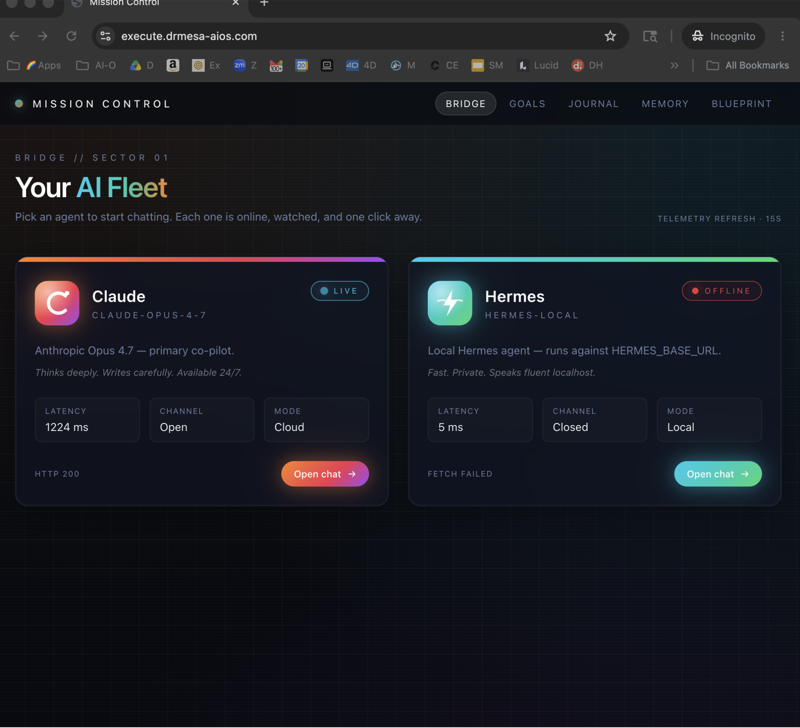
Hermes is the AI agent built into Julian Goldie's Agent OS. It breaks a goal into steps, writes and edits code, and runs tools on your behalf. But an agent is only ever as good as the model behind it and the operator in front of it. Below we cover both sides — the model subscriptions that power Hermes, and the community that teaches you to use it.
What actually powers the Hermes agent
Hermes lives inside the Agent OS as an orchestration layer. It does not generate intelligence on its own; it sends your instructions to a large language model, then turns the model's replies into real actions — edits, commands, and checks. That means your subscription choice is, underneath, a model choice. Swap the model and Hermes changes character completely on speed, cost, and code quality.
There are four realistic ways to feed Hermes today: the Kimi K3 coding plan from Moonshot AI, an Anthropic Claude subscription, an OpenAI GPT-5.6-Codex subscription, or free local models through Ollama. Each earns its place for a different kind of user, so let's take them one at a time.
The best subscription for hermes agent coding, tested on Goldie Bench
One caveat before the verdicts. The rankings here come from Julian's own hands-on testing on Goldie Bench — his personal set of real coding tasks run through Hermes, scored on cost and quality of output. They are his findings, not independent benchmarks. Your results will shift with your projects, your prompts, and your hardware, so treat this as a strong starting point rather than gospel.
Kimi K3 coding plan (Moonshot AI)
The Kimi K3 coding plan is Moonshot AI's subscription aimed squarely at developers. It has a reputation for strong value on coding work: generous usage for the price, dependable tool-calling, and steady performance across long, multi-step edits.
In my Goldie Bench testing, the Kimi K3 coding plan gave the best value for coding with Hermes. It held up on long agent runs without draining a budget, which matters when Hermes is looping over one task for an hour or more. Again, that is Julian's finding, not a universal law — but on cost per useful line of code, it came out ahead of the pack for me.
Claude (Anthropic)
An Anthropic Claude subscription is the premium pick with a strong reputation for careful reasoning and clean code. Many developers rate its top models among the best available for complex refactors, tricky logic, and following nuanced instructions without wandering off task.
The trade-off is cost. Heavy agent use can push you toward the higher tiers quickly, so Claude rewards people who prize maximum quality over sheer volume of runs.
GPT-5.6-Codex (OpenAI)
OpenAI's GPT-5.6-Codex subscription pairs a capable, coding-tuned model with a mature ecosystem and wide tool support. The Codex line is shaped specifically for programming, and the sheer volume of documentation and community examples makes it a safe, well-trodden choice.
It sits in a similar premium bracket to Claude. You are paying for polish, reliability, and the comfort of a huge base of examples to lean on whenever you get stuck.
Free local models via Ollama
Ollama lets you run open-weight models on your own machine at no cost. Nothing leaves your computer, there is no subscription, and you can experiment as much as you like without watching a meter tick.
The catch is hardware and ceiling. Local models generally trail the frontier options on hard coding tasks, and you need a capable machine to run the larger ones at a usable speed. For private tinkering, learning, or simple jobs, though, free is very hard to argue with.
Comparison of the best subscription options for Hermes
| Subscription | Best for | Cost profile | Main trade-off |
|---|---|---|---|
| Kimi K3 coding plan (Moonshot AI) | Best coding value — Julian's Goldie Bench pick | Strong value for the usage you get | Newer name than the US incumbents |
| Claude (Anthropic) | Maximum reasoning quality on hard code | Premium | Costs climb fast on heavy agent use |
| GPT-5.6-Codex (OpenAI) | Mature ecosystem and reliability | Premium | Similar price bracket to Claude |
| Ollama (local models) | Free, private experiments and learning | Free | Needs good hardware; lower ceiling |
📺 Watch: Hermes Agent + Blender MCP is INSANE!
Which subscription should you pick?
There is no single winner for everyone — match the tool to the job instead of chasing a label.
- Best value for heavy coding: the Kimi K3 coding plan, based on Julian's Goldie Bench results. Choose this if Hermes runs long coding sessions and budget matters.
- Maximum quality on hard problems: an Anthropic Claude subscription, if you would rather pay more for careful reasoning.
- Ecosystem and familiarity: GPT-5.6-Codex, if you already work inside OpenAI's tools every day.
- Free and private: Ollama, for experiments, learning, or simple tasks at zero cost.
A common path is to start on Ollama for free while you learn the ropes, then move Hermes onto the Kimi K3 coding plan once you are shipping real work every day. Some operators keep a premium Claude or Codex plan in reserve for the occasional hard problem where top-tier reasoning is worth the extra spend.
If you want to learn to make money with the Hermes agent, check out the AI Profit Boardroom — the Agent OS, Hermes training, and a community of serious operators are all inside. → Start running Hermes for real income
📺 Watch: NEW Hermes Agent Cloud Update is INSANE!
The best subscription to learn Hermes: AI Profit Boardroom
A model subscription powers Hermes. A community subscription teaches you to drive it. These are different purchases, and for most people the second delivers the faster return.
The AI Profit Boardroom is where Hermes and the Agent OS are taught step by step. Instead of guessing at prompts, settings, and workflows, you get proven templates, walkthroughs, and feedback that turn Hermes from a novelty into something that reliably produces work — and income.
If your goal is to make money with the agent rather than just admire it, the learning subscription often matters more than which model you pick. The model is close to a commodity now; knowing how to operate it is the real edge, and that edge is exactly what a good community hands you.
Frequently asked questions
Do I need a paid model subscription to run Hermes?
No. You can start with free local models through Ollama and get a real feel for how Hermes works. A paid plan like the Kimi K3 coding plan mainly buys higher capability plus longer, more reliable agent runs when you are ready for serious work.
Is the Kimi K3 coding plan objectively the best model?
No. It was the best value in Julian's Goldie Bench testing for coding with Hermes, which is hands-on and personal rather than an independent benchmark. Claude and GPT-5.6-Codex are excellent and may well suit your work better.
Can I switch models later without redoing everything?
Yes. Because Hermes runs inside the Agent OS as a separate layer, you can change the underlying model or subscription without rebuilding your workflows. Many operators mix and match over time as the tools improve.
What is the difference between a model subscription and the AI Profit Boardroom?
A model subscription feeds Hermes the intelligence to do the work. The AI Profit Boardroom teaches you how to run Hermes and the Agent OS to actually earn from it. Most people who succeed end up with both.
Does a more expensive plan always mean better results?
Not necessarily. A premium model can lift quality on hard tasks, but a tight brief and good operator skills often matter more than the price tier. That is a big part of why the community subscription pays for itself.
The Bottom Line
There is no single winner. For coding value, Julian's Goldie Bench testing put the Kimi K3 coding plan on top; for maximum quality, reach for Claude; for ecosystem and familiarity, choose GPT-5.6-Codex; for free and private, run Ollama. Any of them can power the Hermes agent well.
Whichever model you feed it, remember where the real leverage sits — in knowing how to drive Hermes inside the Agent OS. Pick a subscription that fits your budget today, then invest in the skills that make it pay. That combination, far more than any single plan, is what makes the Hermes agent worth running.