Yes — Claude Fable 5.1 watermark technology is real and switched on: every output from Anthropic's new flagship carries an invisible statistical watermark, because all Claude models released after 2 August 2026 include watermarking under the EU AI Act's transparency rules. It does not change what the model writes, it contains no information about you, and — crucially for anyone publishing AI-assisted content — the detection tool that can read it is restricted to a defined list of eligible organisations, not open to the public.
📺 Watch: Claude Fable 5.1 Just Set a New AI Performance Record
🔥 Get the Agent OS as a free bonus: AI Profit Boardroom members get the full Agent OS zip, prompt libraries, daily tutorials and weekly live coaching calls. → Get inside
Everything in this guide comes from Anthropic's official Claude Fable 5.1 and Mythos 5.1 announcement, published 1 September 2026, which is where the company documents the watermark, the detection API and who can access it. Here is how it works and what it actually means for your content.
Claude Fable 5.1 Watermark: How It Actually Works
Anthropic describes the watermark as "a numerical way of determining the likelihood that Claude was involved in writing a piece of text". Three properties from the announcement matter most:
- It is invisible in normal use. In Anthropic's words, "this watermark is invisible to anyone who does not have the detection API". There is no visible tag, badge or metadata a reader can spot in the text itself.
- It does not degrade output. The company states it "has no practical impact on the quality or content of Claude's outputs" — the watermark lives in statistical patterns, not in awkward phrasing or inserted markers.
- It carries no personal data. Per the announcement, it "contains no information about the user, their organization, or their conversations with Claude". Detection can suggest Claude involvement; it cannot identify who prompted it.
Note the word "likelihood". This is probabilistic detection, not a certainty stamp — the API returns an indicator of how likely Claude involvement is, which is a meaningfully different thing from proof.
Why the Watermark Exists: The EU AI Act Timeline
The watermark is a compliance feature, not a product feature. Anthropic signed the EU AI Act's Code of Practice on Transparency of AI-Generated Content in July 2026, and that commitment triggered the requirement: every Claude model released after 2 August 2026 ships with watermarking. Claude Fable 5.1, released 1 September 2026 alongside its restricted sibling Claude Mythos 5.1, is simply the highest-profile model to launch under the policy — the watermark is not unique to it, and older models released before the cut-off are a separate question the announcement does not address.
That timing detail matters if you are choosing models for content work: this is the industry direction across every major lab operating in the EU, not an Anthropic quirk, and it will apply to whatever ships next.
If you want to build an AI content operation that stays ahead of changes like this, check out the AI Profit Boardroom → see the full playbook library inside. Want to talk through your own setup first? Book a free SEO strategy session with Julian's team.
Who Can Actually Detect the Claude Fable 5.1 Watermark
This is the part most coverage gets wrong, so it is worth quoting precisely. The detection API is "currently available to eligible organizations (such as regulators, law enforcement, media, fact-checkers, independent researchers, educational organizations, and EU civil society groups) as required under EU law", and "it is also available for enterprises that are similarly obligated to verify watermarking for their own compliance with the Act". Anthropic adds that it plans "to expand access to the detection API over time", with a registration form for interested organisations.
Read that list carefully for what is absent: there is no public checker, and search engines are not named as an access category in the announcement. Whether any given platform gains access later is speculation — but as of 1 September 2026, detection is a private preview for a defined compliance audience.
What This Means If You Publish AI-Assisted Content
A few practical conclusions follow directly from the sourced facts above — and a few popular fears do not:
- The watermark is not a quality signal. It indicates likely Claude involvement, nothing about whether the content is good, accurate or useful. Ranking systems have always been about usefulness to the reader, and nothing in this announcement changes what makes content worth publishing.
- Nobody can trace text back to you. With no user, organisation or conversation data embedded, detection identifies the tool at most — never the author. Client confidentiality concerns about watermarks pointing at a specific account have no basis in the documented design.
- Editing economics change. A statistical watermark is woven through token choices, so the honest working assumption is that lightly edited output remains detectable to the API. If your workflow's value depends on AI text being unidentifiable, that was always fragile — the durable play is content whose research, data and perspective stand on their own regardless of what wrote the first draft.
- Transparency obligations may reach you first. If you operate in the EU or serve EU clients, the same Act that mandates the watermark also brings disclosure duties for deployers of generative AI. The enterprise access route exists precisely because businesses need to verify their own compliance.
The Model Behind the Watermark
The watermark headline should not obscure that Claude Fable 5.1 is a substantial release in its own right. Per the same announcement, it scores 55.8% on Terminal-Bench 4.0 for agentic coding against 42.0% for Fable 5 and 52.3% for Opus 5, more than doubles Fable 5's Terminal-Bench-Science result (52.6% vs 24.7%), and cuts cache-read pricing by 75% to $0.25 per million tokens. It is available now via the Claude API as claude-fable-5-1, plus claude.ai, Claude Code, AWS, Google Cloud and Azure. For how the Claude line stacks up against rivals, our Claude Opus 5 vs Fable 5 comparison covers the previous generation's trade-offs, the Kimi K3 vs Fable 5 breakdown covers the open-weight challenger, and the Goldie Bench write-up covers how these frontier brains compare in hands-on tests.
Claude Fable 5.1 Watermark FAQ
Which models carry the watermark? Per the announcement, all Claude models released after 2 August 2026 — which covers both Claude Fable 5.1 and Claude Mythos 5.1, released 1 September 2026. For models released before that date, the announcement makes no statement either way.
Can the watermark identify me or my client? No. Anthropic states it "contains no information about the user, their organization, or their conversations with Claude". The strongest thing detection can ever say is that Claude likely wrote some text — never which account asked for it.
Can I turn it off? The announcement describes no opt-out, and given the watermark exists to satisfy the EU AI Act's transparency code, one seems unlikely. Treat it as a permanent property of output from the new models.
Can readers or competitors check my content? Not through any tool Anthropic has made public. Detection requires the API, which is in private preview for the eligible-organisation categories listed above. A competitor pasting your article into a public checker is not a scenario the announcement's access model allows for today.
Does it change how the text reads? Anthropic says it has "no practical impact on the quality or content of Claude's outputs" — it is embedded statistically rather than through visible tells, so there is nothing to proofread out.
Will it affect rankings? Nothing in the announcement connects the watermark to search. Search engines are not among the named access categories, and ranking systems publicly evaluate content on usefulness. The defensible conclusion: publish content that would deserve its position regardless of authorship, and the watermark question becomes moot.
How to Adapt Your Workflow Without Panic
The sensible response to the Claude Fable 5.1 watermark is boring: keep publishing content that earns its place. Concretely, that means leading with information that does not exist elsewhere — your data, your process, your results; using AI for structure, drafts and research synthesis rather than as the sole source of substance; and disclosing AI assistance where your jurisdiction or platform requires it, since the compliance tide the watermark rides is rising, not receding. The same announcement's transparency section is a preview of where every lab is heading — Google is making similar moves across its stack, from agentic video processing in Gemini to free transcription tooling — and the operators who win are the ones treating AI as leverage on top of real expertise. The Agent OS resource covers how to structure that kind of AI-assisted production system end to end, and releases like OpenClaw's background sessions and the Ox Alpha model show how fast the tooling around it keeps compounding.
If you want daily breakdowns of AI changes like this plus systems to profit from them long-term, check out the AI Profit Boardroom → join the Boardroom here. Or get a personal answer on how the watermark era affects your niche — book a free SEO strategy session and leave with a plan.
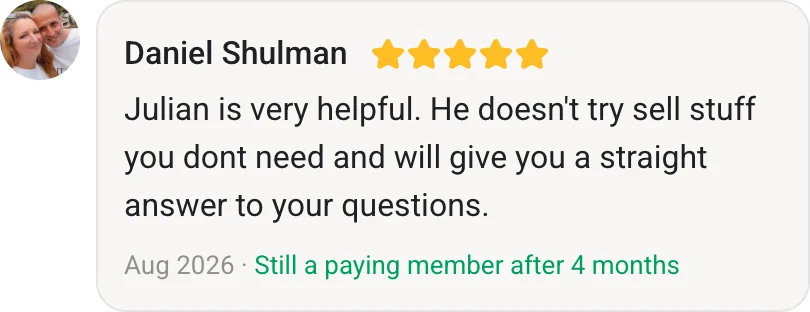
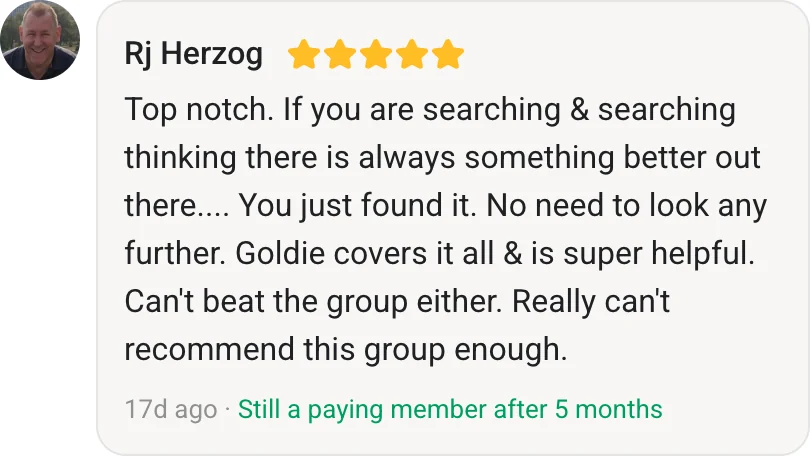
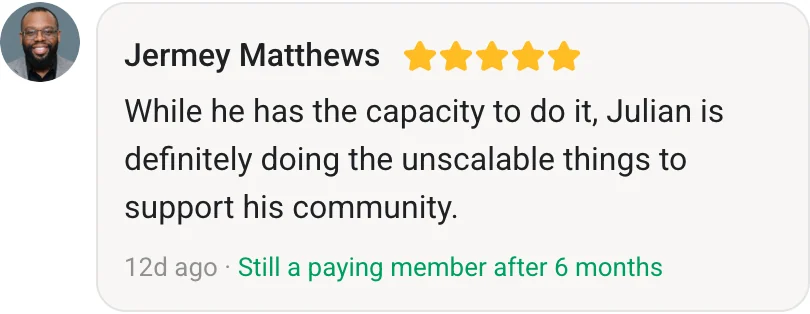
What members say about the AI Profit Boardroom
Read all 114 reviews on Skool →




Ready To Join The #1 AI Community?
Join 3,400+ entrepreneurs inside the AI Profit Boardroom. Get the Agent OS, 1,000+ plug-and-play AI agent workflows, daily Q&A with Julian and 4 live coaching calls every week.
Join The AI Profit Boardroom →7-Day No-Questions Refund • 30-Day ROI Guarantee
Wait — before you leave
Get the entire AI Profit Stack for $69/mo locked
- 🎯 1,000+ done-for-you AI agent workflows
- 📅 4 live coaching calls every week with me
- 👥 3,400+ AI operators inside
- 🛡️ 7-day refund + 30-day ROI guarantee