The claude opus 5 vs gpt 5.6 question lands in my inbox almost every day, so I stopped hand-waving and put both flagships through real work. This is not a spec-sheet recap. It is what I actually saw running Anthropic's top-tier Claude Opus 5 against OpenAI's flagship GPT-5.6 on live jobs, scored the same way every time through my Goldie Bench process.
📺 Watch: GPT 5.5 VS DeepSeek V4 VS Claude Opus 4.7: Who Wins?
🔥 Get the Agent OS as a free bonus: AI Profit Boardroom members get the full Agent OS zip, prompt libraries, daily tutorials and weekly live coaching calls. → Get inside
Everything below is my hands-on opinion, not objective fact. Your results will shift with your prompts, your tasks and your tooling. But after weeks of side-by-side runs inside my Agent OS, I have a clear sense of where each model earns its keep and where I would not waste money on it.
What Claude Opus 5 and GPT-5.6 actually are
Both are the current top-tier models from their labs, and both are excellent. They aim at slightly different sweet spots, and that difference is the whole story.
Claude Opus 5
Opus 5 is Anthropic's heavyweight. In my testing it leans into deep reasoning, careful long-form coding and agentic work that runs over many steps without losing the thread. It tends to slow down and think, which is exactly what you want on a gnarly refactor or a layered strategy problem where a wrong turn costs you an hour.
GPT-5.6
GPT-5.6 is OpenAI's flagship, and my runs show it built for speed and smoothness. Replies feel fast and fluent, and the output cost tends to sit lower, which matters a lot when you are generating at volume. Its coding agent, Codex, is a big part of why so many developers reach for it in a real repo.
The dimensions I score on the Goldie Bench
I do not trust a single clever prompt. I run the same batch of real jobs through both models and rate them on the things that actually decide my working day:
- Reasoning quality — does it hold a hard, multi-step problem together to the end?
- Coding — clean, working code and sensible fixes, not just plausible-looking ones.
- Speed — how quickly it turns a prompt into something I can use.
- Cost — what a typical run feels like on the bill when I scale it up.
- Craft — tone, structure and how little I have to edit afterwards.
- Agentic use — can it drive a long, tool-using task all the way to the finish?
Claude opus 5 vs gpt 5.6: my Goldie Bench scorecard
Here is how the two shook out across those dimensions in my own runs. Treat this as my hands-on read, not a lab result. I am describing the lean I saw again and again, not a measured number.
| Dimension | Claude Opus 5 | GPT-5.6 |
|---|---|---|
| Deep reasoning | My top pick | Strong, a step behind on the hardest tasks |
| Hard coding | My top pick for tricky work | Excellent, especially through Codex |
| Speed | Slower, more deliberate | My top pick |
| Output cost | Higher in my runs | My top pick for cheap volume |
| Craft and tone | Very close | Very close |
| Long agentic runs | My top pick for stamina | Fast and very capable |
📺 Watch: GPT 5.5 DESTROYS Claude Opus 4.7?
Where each model wins in my testing
Deep reasoning and hard coding
When a job is genuinely hard — a tangled bug, a big refactor, a strategy problem with lots of moving parts — Opus 5 is the one I reach for. In my Goldie Bench runs it stays coherent deeper into a long task and needs fewer corrective nudges from me. It is the model I trust to actually think, not just to answer quickly and hope.
Speed and cost at volume
When I need a hundred variations, quick first drafts or fast turnarounds, GPT-5.6 gets my vote. It is quick, it is smooth, and the output cost feels lighter when I am running a lot of it back to back. For high-volume content and rapid iteration, that speed and price advantage compounds fast across a week of work.
Craft, tone and agentic runs
On pure writing craft the two are close enough that I judge case by case, and sometimes I run both and simply pick the better paragraph. On long agentic tasks — chains of tool calls that run for a while — Opus 5 showed the better stamina in my testing, while GPT-5.6 with Codex was faster and very capable on well-scoped coding jobs inside a repo.
📺 Watch: Claude Opus 4.7 VS GPT 5.4: Who Wins?
Why the harness matters as much as the model
Here is the part most people miss in the claude opus 5 vs gpt 5.6 debate: the wrapper around the model changes the result. Running Opus 5 inside Claude Desktop, with the right files and tools connected, feels different from calling it raw. GPT-5.6 through Codex, wired into a real codebase, punches well above what the same model does in a plain chat box.
So when I compare, I try to compare like for like — same task, same tools connected on both sides — because a great harness can make the "weaker" model on paper win the actual job. Tooling is not a footnote. In my experience it is roughly half the fight, and it is the part you control.
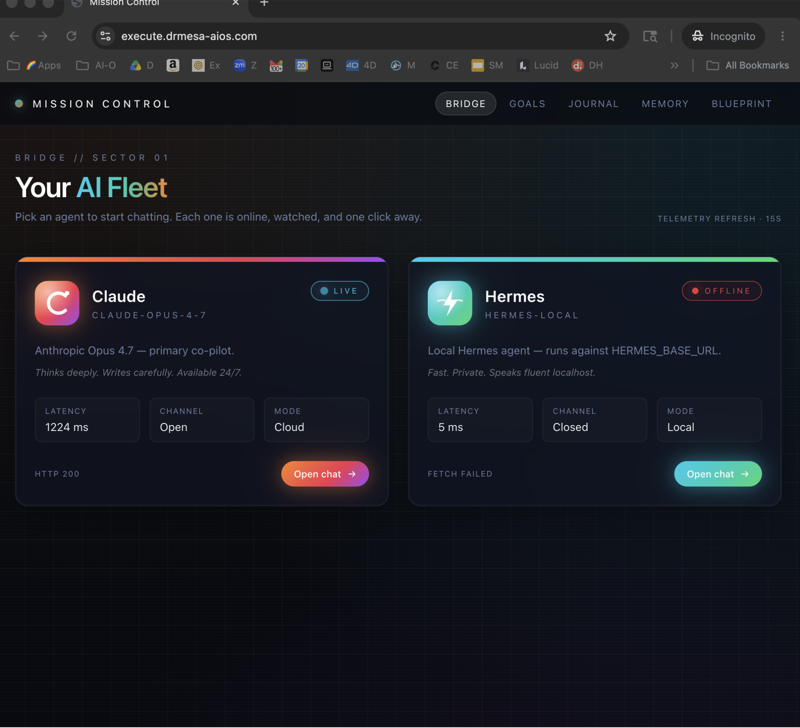
How I run both inside Hermes and the Agent OS
I do not pick one model and delete the other. In my Agent OS I keep both on tap and route each job to whichever suits it. That is the whole point of the setup: the model is a swappable engine, not a religion you sign up to.
In practice, my Hermes workspace sends the deep, high-stakes work to Opus 5 — the hard reasoning, the risky refactors, the long agentic runs where a mistake is expensive. The fast, cheap, high-volume work — bulk drafts, quick rewrites, first passes — goes to GPT-5.6, where the speed and lower cost do the heavy lifting.
The result is a stack that is both smart and affordable. I get Opus 5 quality where it genuinely counts and GPT-5.6 speed where it needs to scale, without paying premium rates for a job that never needed them in the first place.
If you want Claude Opus 5 and GPT-5.6 running side by side in one Agent OS, check out the AI Profit Boardroom — my community where I share the exact model routing, prompts and Hermes builds I use every day. → Show me how to run both models in one stack
Frequently asked questions
Is Claude Opus 5 better than GPT-5.6?
In my Goldie Bench testing, Opus 5 is my pick for the hardest reasoning and coding, and GPT-5.6 is my pick for speed and cheap volume. "Better" depends entirely on the job in front of you. Neither one wins everything, which is exactly why I keep and run both.
Which one is cheaper to run?
GPT-5.6 felt lighter on output cost in my runs, which is why I lean on it for high-volume work. I will not quote you exact prices here because they move — check the current rates yourself — but the lower-cost direction is the pattern I kept seeing.
Which is better for coding?
Both are strong. For tricky, high-stakes coding I lean Opus 5, and for fast, well-scoped coding inside a repo I reach for GPT-5.6 with Codex. Honestly, the harness you use matters just as much as the model on coding jobs.
Do I have to choose one?
No, and I do not. The smartest move I have found is to keep both in one Agent OS and route each task to the right engine for the job, rather than betting your whole workflow on a single model.
The Bottom Line
My honest, hands-on take on claude opus 5 vs gpt 5.6: Opus 5 is the deep thinker I trust on hard reasoning, tricky code and long agentic runs, while GPT-5.6 is the fast, smooth, lower-cost workhorse for volume. This is my Goldie Bench opinion, not a lab verdict, and your own results will shift with your prompts and tooling.
The winning play is not picking a side. It is wiring both into one stack, letting the harness do its job, and sending every task to the model that handles it best. That is exactly how I run my Agent OS — and it beats loyalty to any single model every single time.