The hermes email skill is what happens when an SEO agency owner gets tired of juggling outreach software and asks his AI agent to run cold email instead. It powers what Julian Goldie calls the Hermes Outreach Engine: an experimental tool that finds leads, verifies their addresses, drafts every message for approval, and tracks replies from a single dashboard.
📺 Watch: NEW Hermes Email Agent is INSANE!
🔥 Get the Agent OS as a free bonus: AI Profit Boardroom members get the full Agent OS zip, prompt libraries, daily tutorials and weekly live coaching calls. → Get inside
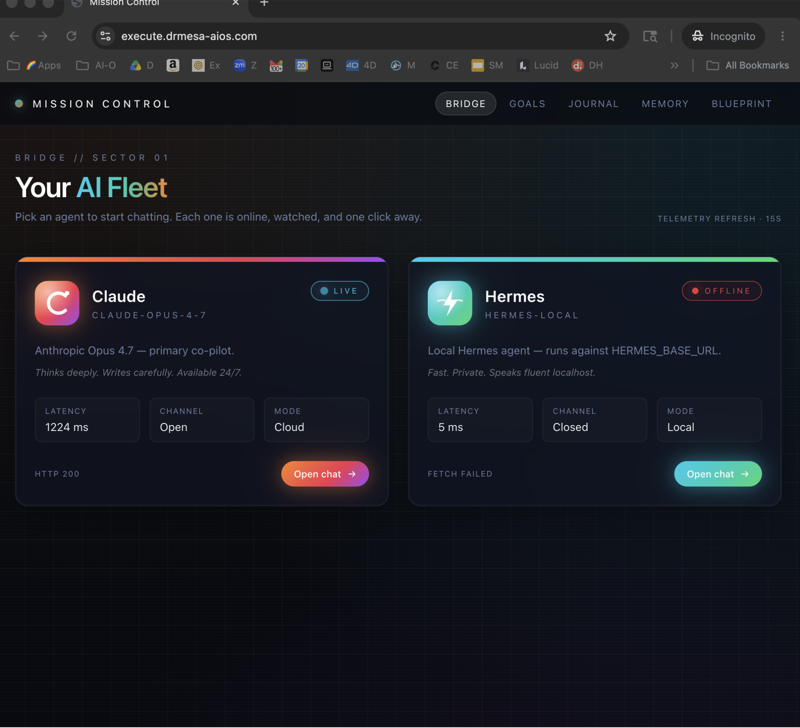
Julian built it for link-building outreach at his SEO agency. The team still uses Pitchbox for client campaigns; this is the custom in-house alternative, wired directly into his Agent OS, where it lives as one tab.
This guide breaks down what the skill actually does, the six moving parts behind it, how it was built, and how to run agent-driven outreach without turning into a spammer. Everything here comes from Julian's own hands-on walkthrough of the tool.
What is the hermes email skill?
In plain terms, it is the email capability inside Hermes, Julian's AI agent. Rather than paying for a stack of outreach subscriptions, the skill strings together lead discovery, enrichment, verification, filtering, sending and tracking, then puts a dashboard on top so you can see everything in one place.
Julian is upfront that the whole thing is experimental and still evolving. His view: sometimes the simplest systems are the best. There is no bloated feature list, just a lean tool built to do one job for his agency, which is exactly why it is worth studying.
Because it runs as part of an agent, you operate it by talking to it. You describe what you want, review what it proposes, and approve what goes out. That last part matters, and we will come back to it.
Inside the Outreach tab
Open the Outreach tab in the Agent OS and you land on a dashboard: how many leads are in the system, how many have been validated, how many are actually sendable, and how many companies were skipped for being too big to bother with.
Below that sits a recent-activity log showing the date, who was contacted, and the topic. At a glance, you know what your agent has been doing while you were doing something else.
Lead generation
Lead generation starts with a sentence. Type what you want, for example "SEO agencies", and the engine goes off and finds companies, each with a domain, an email address, company size, status, enrichment state and per-lead notes.
Two details stand out. First, it automatically hides companies that are too big to bother with, because giant corporations rarely answer cold outreach. Second, you stay in charge of the list: delete any lead you do not like, then select the rest into a campaign.
This is the same shift driving AI lead generation agents more broadly: the human sets direction and makes the judgement calls, the agent does the digging.
Campaigns
Campaigns are where the engine earns its keep. Julian shows a backlink outreach campaign with counts for sent, drafts, bounces and contacted, alongside the email copy itself and the audience it targets.
Sent items are hidden by default, with a toggle to unhide them when you want to inspect what went out. Bounce protection watches deliverability in the background: if too many messages bounce, the engine stops sending rather than burning the domain.
The most important setting is draft mode. Every message is written as a draft for review, and nothing goes out without approval. You can pause, stop or delete a campaign at any point, and reply tracking reads the connected inbox so responses appear in the same place as everything else.
The six moving parts of the hermes email skill
Julian describes the system as six steps, and the logic behind them is simple: each step removes one reason a cold email fails.
| Step | What it does | The failure it removes |
|---|---|---|
| 1. Describe | You tell it who to reach, for example "SEO agencies interested in white-label link building" | Emails aimed at people who were never a fit |
| 2. Enrich | Each company becomes a real person with details attached | Generic messages addressed to nobody in particular |
| 3. Verify | Email validity is checked through Hunter | Bounces that wreck sender reputation |
| 4. Filter | Giant companies that never reply are skipped | Wasted sends that drag down deliverability and reply rate |
| 5. Send | One message drafts the whole campaign, sent from a separate agent inbox | Hours of manual drafting, plus risk to your main inbox |
| 6. Track | Dashboards, analytics and reply tracking in one view | Flying blind and missing responses |
The filter step deserves a highlight. Skipping oversized companies is not laziness; Julian's point is that it improves both deliverability and reply rate, because you stop pouring messages into inboxes that never respond.
The send step compresses the most work. One message to the agent drafts an entire campaign, ready and waiting for your review.
📺 Watch: NEW Hermes AI Email Agent is INSANE!
How Julian built it, and what it connects to
Julian did not code this alone. He had Claude, working inside Claude Desktop, help him build the tool, then wired it into the Agent OS as its own tab.
Under the hood, several pieces are connected: the Hunter API for verification and leads, Firecrawl, the Google Workspace API for sending and reading email, and Himalaya, the skill that lets Hermes read the inbox and reply. The setup also plays nicely with OAuth logins, such as Grok or the MiniMax coding plan.
The build reflects the same test-it-yourself habit behind Goldie Bench, Julian's own hands-on testing series. Those findings are his personal experience rather than a formal industry benchmark, but the pattern is consistent: build the thing, run it on real work, keep what survives. The Outreach Engine is one of the things that survived.
📺 Watch: New Hermes Agent Skill Bundles are INSANE!
Doing outreach responsibly
Cold outreach has a deserved reputation problem, so the guardrails matter as much as the automation. Julian's setup bakes several in.
- A separate inbox. The agent gets its own inbox and never touches your main one.
- Transparency. It is clear to recipients that an AI agent is writing, and you can say so directly in the copy.
- Verification and filtering. The goal is fewer, better-targeted emails, not a bigger blast list.
- Draft mode. A human reviews and approves every message before it sends.
- Bounce protection. Sending stops automatically when bounces climb.
Run this way, the engine behaves more like a diligent assistant than a spam cannon: small validated lists, honest copy, and a human sign-off on everything that leaves the building.
Common objections, answered
"Cold email does not work any more"
Julian's agency builds plenty of backlinks with it. Outreach still works when the list is verified, the targeting is filtered and the message is relevant. What died is the lazy version.
"You need expensive tools"
No. The entire point of building this in-house was to avoid renting yet another platform. A custom skill plus a few connected services covers lead generation, sending and tracking end to end.
"I will set it up later"
Every week you wait is a week without the system: leads not found, emails not verified, replies not tracked. The engine compounds, but only from the day it is switched on.
If you want an email agent generating leads while you sleep, check out the AI Profit Boardroom — the full Agent OS, with the Outreach Engine tab inside. → Get the Outreach Engine working for your business
Frequently asked questions
Is the hermes email skill a finished product?
No, and Julian does not pretend otherwise. It is experimental and evolving, and it currently lives as one tab in the Agent OS inside the AI Profit Boardroom. Expect it to keep changing as his agency uses it.
Will it send emails without my approval?
Not in draft mode. Every message is created as a draft for review, and nothing is sent until you approve it. Bounce protection adds a second brake by halting sends when too many messages bounce, and campaigns can be paused, stopped or deleted at any time.
Does it use my personal inbox?
No. The engine sends from a separate agent inbox, so your main inbox is never touched. Replies are read through that connected inbox using the Google Workspace API and the Himalaya skill.
What does the setup connect to?
Julian's build links the Hunter API for verification and leads, Firecrawl, the Google Workspace API for sending and reading email, and Himalaya so Hermes can read the inbox and reply. OAuth logins such as Grok or the MiniMax coding plan work with it too.
The Bottom Line
The hermes email skill turns cold outreach from a pile of subscriptions and spreadsheets into one tab inside an agent operating system: describe, enrich, verify, filter, send, track. Each step removes a reason cold email fails, and draft mode keeps a human in charge of every single send.
It is experimental, and that is part of the lesson. As Julian puts it, sometimes the simplest systems are the best. If outreach is anywhere on your plan, the arithmetic is unforgiving: every week of "later" is a week the system was not working for you.