The fastest answer to how to learn building AI agents is this: install one real agent, build one small starter project with it, then add one new skill at a time until you can build agents that do real work for a business. You learn to build by building, not by reading about building.
📺 Watch: Hermes + Claude + Codex - The AI System That Does EVERYTHING!
🔥 Get the Agent OS as a free bonus: AI Profit Boardroom members get the full Agent OS zip, prompt libraries, daily tutorials and weekly live coaching calls. → Get inside
Most people overcomplicate this. They think they need to master a framework, learn to code and read every paper before they build anything. You don't. You need one agent, one small project and the patience to fix what breaks.
If you want a structured route, the AI Profit Boardroom ($69/mo) has full courses on Hermes Agent, Claude Code and building an agentic operating system, with a beginner-to-expert roadmap and 4 live coaching calls a week. But everything below works whether you join or not.
What Building an AI Agent Actually Means
An AI agent is a model plus tools, memory and instructions that can take actions toward a goal. It can browse, run commands and write files. It doesn't just chat.
So building an agent means deciding three things. What job should it do? What tools does it need to do that job? And what should it remember so it gets better over time? Answer those and you've designed an agent.
If you haven't used an agent yet, start with my guide on how to learn AI agents first, then come back here.
The Skills You Need to Build AI Agents
You don't need all of these on day one. You pick them up as you build. But these are the six skills that matter.
Prompting
Clear instructions are the foundation. Tell the agent the goal, the steps, what good output looks like and where to save it. Vague prompts give vague results.
Tools
Tools are what let an agent take action. Browsing, file access, running commands, calling apps. Learning which tools a job needs is a core building skill.
Memory
Memory lets an agent remember things about you, your business and past tasks. Without it, you're re-explaining everything every time.
Skills
A skill is a saved, repeatable job. When your agent does something well, you save it as a skill so it runs the same way next time. This is how one-off experiments turn into reliable workflows.
MCP
MCP lets your agent plug into other apps and services. It's how you give an agent access to more of your tools without building every connection yourself.
Scheduling
Scheduling lets your agent run a job on its own at a set time. This is the point where an agent stops being something you use and starts being something that works for you.
📺 Watch: Hermes Agent OS: Building Local + Free AI Agents
How to Learn Building AI Agents With 5 Starter Projects
Here's the build-along path I'd give any beginner. Do these in order. Each project adds one new skill on top of the last.
1. A Research Agent
Give your agent a topic and ask it to research it, then write a short summary to a file. This teaches you prompting and the basic tools: browsing and writing files. Keep the topic narrow so you can check the output.
2. An Inbox Triage Agent
Have your agent read a batch of messages, sort them by priority and draft short replies for you to review. This teaches you how to connect an agent to a real app and how to set clear rules for decisions. Always review drafts before anything gets sent.
3. A Content Brief Agent
Ask your agent to take a keyword or topic, research it and produce a content brief in the same format every time. Once it works, save it as a skill. This is your first lesson in turning a good result into a repeatable job.
4. A Scheduled News Digest
Set up an agent that checks the sources you care about and sends you a short digest at the same time every day. This teaches you scheduling and memory, because the agent needs to remember what it already covered.
5. A Browser Task Agent
Give your agent a multi-step job inside a browser, like collecting information from several pages into one list. This teaches you how agents handle longer tasks, where they get confused and how to break work into smaller steps.
After these five, you'll understand the building blocks well enough to design your own agents for your own business. If you want help picking the right project for your situation, book a free AI strategy session.
📺 Watch: LIVE: Building Custom AI Agents FREE with Hermes Agent
How to Learn Creating AI Agents Without Code
Here's what surprises most people about how to learn creating AI agents: you don't need to write code to do it. The no-code approach is simple. You ask your agent to build things for you.
Instead of hand-editing config files or writing scripts, you paste a prompt into your agent. Something like "set up a skill that researches a topic and saves a summary to my notes folder, then test it." The agent does the setup. You watch what it does and learn from it.
This works for almost every step of the build-along path above:
- Adding tools. Ask your agent to connect itself to a tool and test the connection.
- Saving skills. Ask it to turn the task it just did into a reusable skill.
- Scheduling. Ask it to run a job every morning at a set time.
- Fixing errors. Paste the error back in and ask it to fix the problem.
That's how I'd tell anyone to start. Manual setup is a fallback, not the default. You'll pick up the technical details naturally just by reading what your agent did.
Inside the AI Profit Boardroom, members also get the Agent OS, my agentic operating system with Hermes and other agents running with memory, skills, tools, missions and a dashboard. It's a working example of what you can build without starting from a blank screen. The Agent OS guide walks through how it fits together.
Tools to Build AI Agents With
You only need one of these to start. Pick one and learn it well before you add another.
Hermes Agent
Hermes Agent is free and open source. It's a great first agent to build with because it supports memory, skills and tools, and the Hermes Agent official docs are free and the best reference for it. Nous Portal has a free tier of models, so you can learn without paying for usage.
Claude Code
Claude Code is an agent that can read and write files and run commands on your machine. It's strong for building projects, writing skills and automating jobs step by step.
CrewAI Framework
CrewAI is a multi-agent framework where you set up several agents with different roles that work together. It's a step up in complexity, so it makes more sense once you've built a few single agents. CrewAI Learn is its own learning hub.
Whichever tool you choose, the model behind it matters. Check how different models perform on the Goldie Bench before you commit. You can also run local models through Ollama if you'd rather not pay for usage while you learn.
Once you're comfortable with single agents, the next step is agents that run longer jobs on their own. I cover that in how to build an autonomous AI agent.
How to Get Unstuck When Building AI Agents
You will get stuck. Everyone does. A tool won't connect, a skill gives different output each time, or a scheduled job just doesn't run. The question is how long you stay stuck.
Here's what works:
- Ask your agent first. Paste the error and ask it to explain and fix the problem.
- Make the task smaller. If a big job keeps failing, split it into steps and test each one.
- Check the docs. Official docs are the most accurate source when a video is out of date.
- Ask a community. Someone has usually solved your exact problem already.
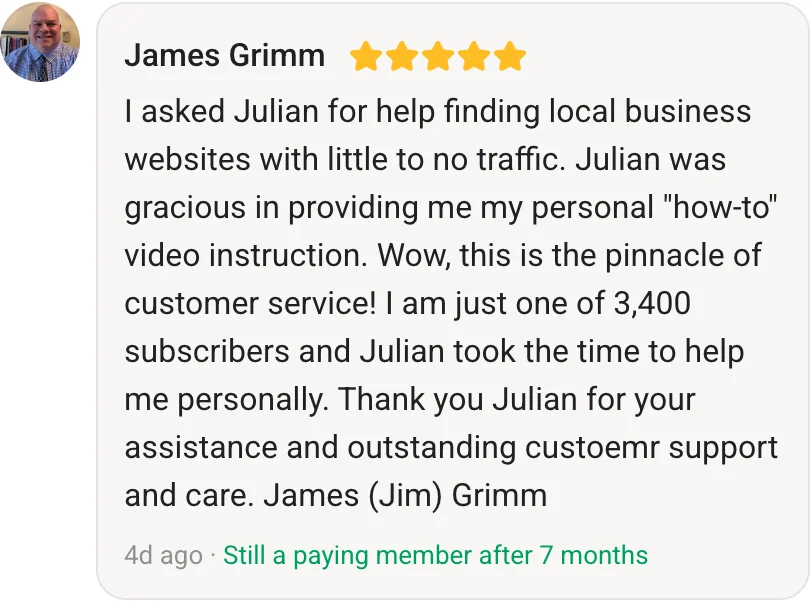
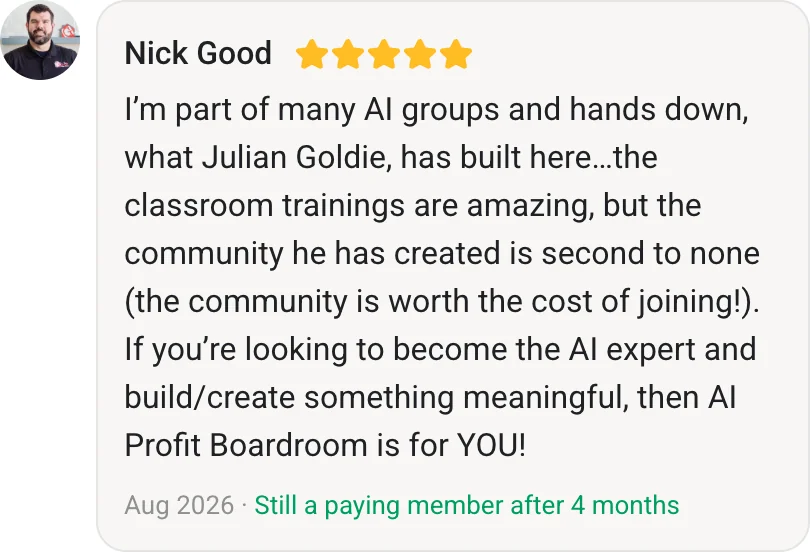
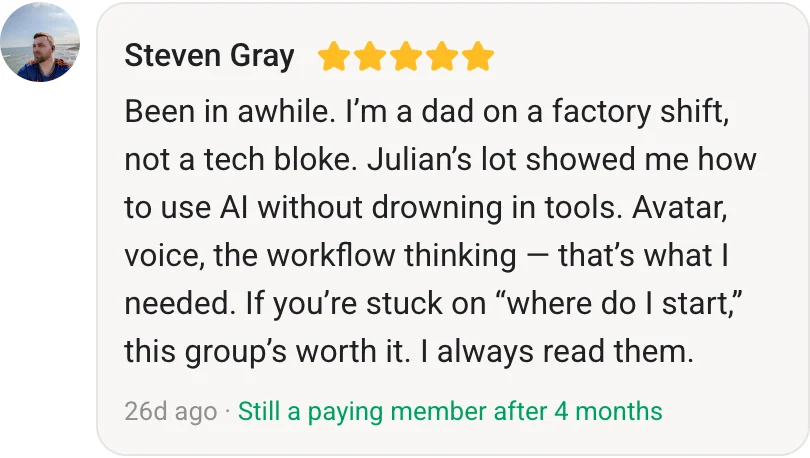
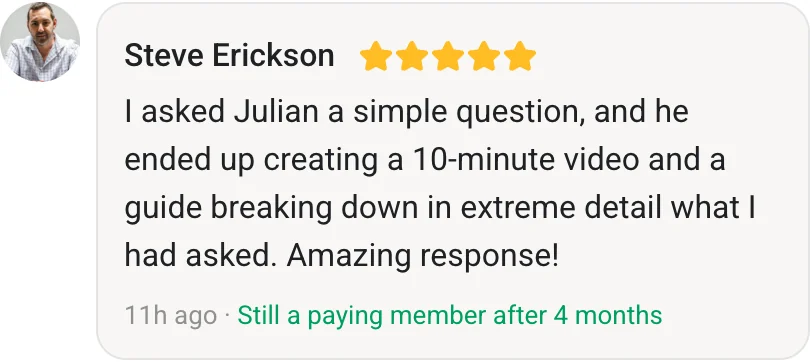
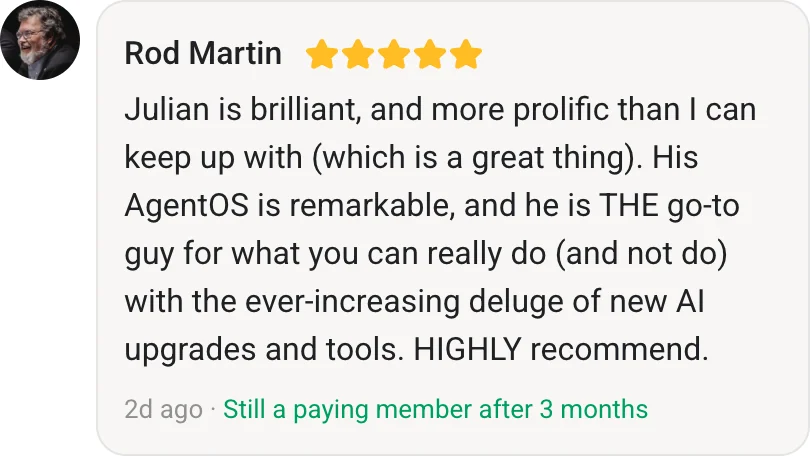
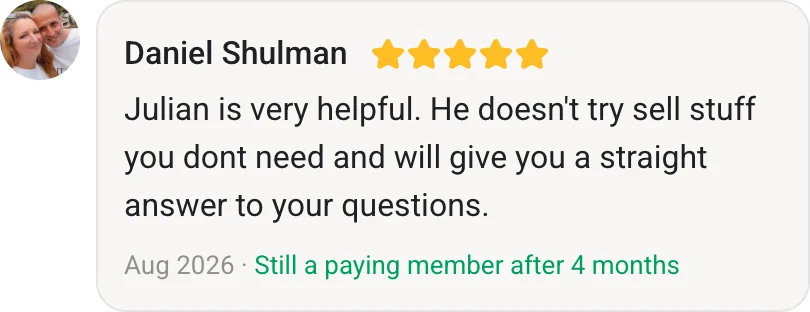
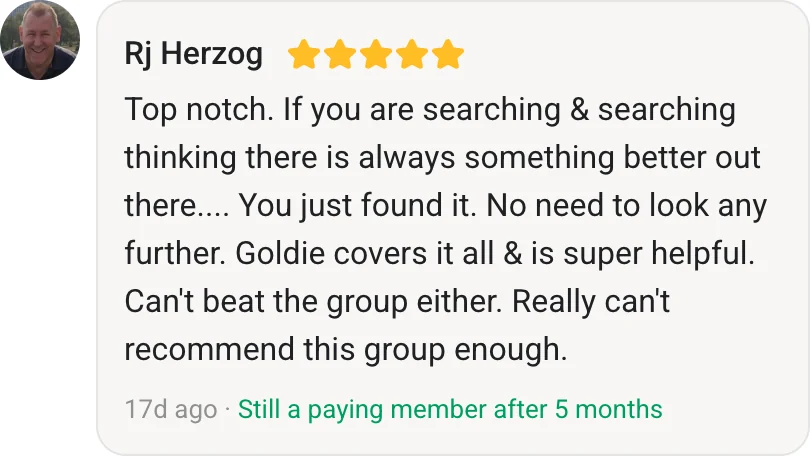
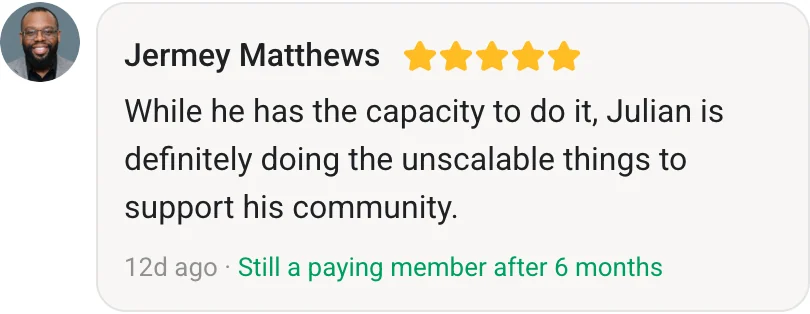
Community is the biggest shortcut. The AI Money Lab is free and gives you a FREE AI Course + Community + 1,000 AI Agents. If you want more support, the AI Profit Boardroom gives you daily updates, 4 live coaching calls a week and the ability to DM me. It's rated 4.9 out of 5 from 114 member reviews on Skool, with a 7-day refund and a 30-day ROI guarantee. I've compared the options in my guide to the best community to build AI agents.
For free daily build tutorials, check out the Julian Goldie SEO YouTube channel, which has 430K+ subscribers.
Frequently Asked Questions
What is the best way to learn building AI agents?
Install one real agent, like Hermes Agent or Claude Code, and build small starter projects with it. Begin with a research agent, then add apps, skills, scheduling and browser tasks one at a time. Ask your agent to do the setup for you, and join a community for when you get stuck.
Do I need to code to build AI agents?
No. You can build working agents by asking your agent to set things up through prompts. Coding helps if you later want to work deep inside frameworks like CrewAI, but it isn't required to start.
Which tool should I build my first AI agent with?
Hermes Agent is a strong first choice because it's free and open source, with free docs and a free tier of models on Nous Portal. Claude Code is another good option. Pick one and stick with it until you've finished a few projects.
What should my first AI agent project be?
A simple research agent. Give it a narrow topic, have it research and save a summary to a file. It's small enough to check and teaches you prompting, tools and file handling in one go.
Start Building Your First Agent
Pick one agent, start the research agent project today, and add one new skill each time it works. If you want a clear plan for the agents your business should build first, book a free AI strategy session. That's how to learn building AI agents: one small project at a time.