Laguna XS 2.1 just dropped — a new free, open-source local agentic coding model from Poolside, and I tested it the day it released. Fast, lightweight, and genuinely usable for building small apps and pages offline. Here's what it is, how it benchmarks, what I built with it, and every way you can run it.
📺 Watch: Laguna XS 2.1 tested — benchmarks, real builds, setup options
Want every new local model tested and wired into one system? That's the Agent OS inside the AI Profit Boardroom. → Join AIPB
What Is Laguna XS 2.1?
It's a free, open-source agentic coding model from Poolside, built for agentic coding and terminal work. It's lightweight, runs smoothly even on modest hardware, has a 256K context window (plenty for a local model), and is available on Hugging Face. It's a step up from the earlier Laguna XS.2, and it just released within the last 24 hours of me testing it.
Laguna XS 2.1 Benchmarks
On SWE-bench Verified, it sits close behind Qwen 3.6 (a very popular local model) and actually outperforms North Mini Code, which I'd previously found solid and fast. Against non-local comparisons, it beats Claude Haiku 4.5 on SWE-bench Pro and outperforms GPT-OSS by a wide margin. It's not trying to beat frontier models — local models aren't there yet — but for its size, it's a genuinely exciting release.
I Tested It: Real Builds, Not Just Benchmarks
Benchmarks only tell half the story, so I built three real things with it:
- A landing page — clean and simple, and honestly better than the equivalent test I ran with Gemma 4.
- A to-do app — fully functional: add, delete, mark active/complete. The UI isn't polished out of the box, but everything actually worked.
- A third demo page — comparable to what I could build with Claude about a year ago, which is a fair way to think about where local models sit today.
My setup was a Mac Studio M4 Max with 36GB memory, and it ran smoothly. One limitation worth flagging: it's not good for 3D models.
3 Ways To Use It
- As a local engine inside the Agent OS — plug it straight into your local setup and everything you build lands in your workspace.
- Through Free Claude Code — run it alongside or instead of Gemma 4 inside the free Claude Code tier.
- As a Hermes agent profile — create a dedicated Hermes profile for it, or use the free API via OpenRouter (which shipped the same day) and plug that straight into Hermes with
hermes model.
Why Run It Locally: Offline & Privacy
Because it runs locally, everything you build stays on your machine — nothing goes to the cloud. It works offline too (genuinely useful on a plane with no wifi), and you can plug it into a memory system so it builds with real context about your business, all without your data leaving your computer.
Should You Use It?
For agentic coding — landing pages, small apps, terminal work — yes, it's a solid free option, especially if your setup can't run local models efficiently (the free OpenRouter API solves that). I'm running it through Goldie Bench next against Gemma 4 and Mox for a full side-by-side; for now, don't just trust benchmarks — test it yourself.
Run It Inside A Full Agent OS
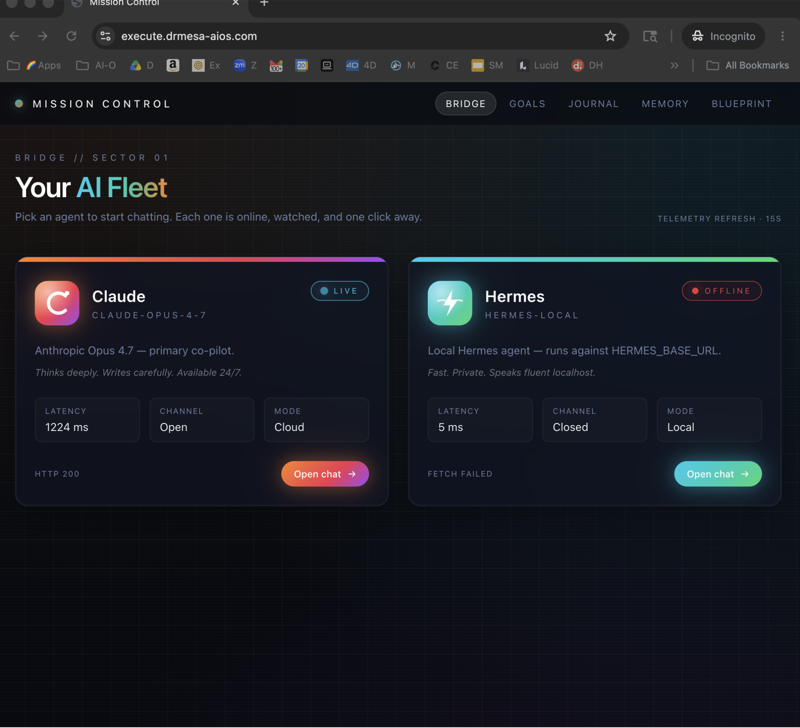
I plug every new model like this straight into the Agent Operating System inside the AI Profit Boardroom — Hermes, Claude, mixture of agents, a local engine, and shared memory, all in one dashboard. Whichever model wins next, you swap it in without rebuilding anything. → Join AIPB.
Frequently Asked Questions
What is Laguna XS 2.1?
A free, open-source agentic coding model from Poolside, built for local coding and terminal work, with a 256K context window.
Is Laguna XS 2.1 free?
Yes — it's open-source and free to run locally, and there's also a free API available via OpenRouter.
How does Laguna XS 2.1 compare to Qwen 3.6?
It's close behind Qwen 3.6 on SWE-bench Verified, and it outperforms North Mini Code.
How do I use Laguna XS 2.1?
Run it as a local engine in the Agent OS, through Free Claude Code, or as a dedicated Hermes agent profile (locally or via the free OpenRouter API).
The Bottom Line
Laguna XS 2.1 is a genuinely solid, free, open-source agentic coding model — fast, lightweight, and capable of real working builds, whether you run it locally or through the free OpenRouter API. Not frontier-level, but a strong free option for coding on your own machine.