If you have been waiting for a local AI model that can actually keep up with real agent work, lfm2.5-2.6b deserves your full attention. Liquid AI has released a free model that lives entirely on your machine, and the headline is wild: it was trained inside the same agent harnesses people like us run every day, including Hermes itself. I have been testing it hands-on, and it changes the maths on local AI completely.
📺 Watch: LFM2.5-2.6B: New FREE Local AI
🔥 Get the Agent OS as a free bonus: AI Profit Boardroom members get the full Agent OS zip, prompt libraries, daily tutorials and weekly live coaching calls. → Get inside
What Is LFM2.5-2.6B?
LFM2.5-2.6B is Liquid AI's new free local model, designed for on-device use and ultra-fast server-side deployment with a small memory footprint. In plain English, it is built to run on the computer you already own rather than in someone else's data centre.
The core numbers are seriously strong for something this compact. You get 2.6 billion parameters trained on 34 trillion tokens, with a 128k context window. That context size means it can hold a huge amount of working material in its head while your agents grind through multi-step tasks.
Setup takes a few commands through Hugging Face or LM Studio. If you want the exact steps, my local model setup guide walks through the whole process. Once it is installed, everything stays on your machine. Nothing goes to the cloud, it works offline, and plane mode is completely fine.
| Spec | Detail |
|---|---|
| Builder | Liquid AI |
| Parameters | 2.6 billion |
| Training data | 34 trillion tokens |
| Context window | 128k |
| Where it runs | Entirely on your machine — on-device or ultra-fast server-side |
| Privacy | Nothing goes to the cloud; works fully offline |
| Setup | A few commands via Hugging Face or LM Studio |
| Price | Free |
Why lfm2.5-2.6b Was Trained Inside Hermes
Here is the part that made me sit up. This model was trained with Hermes as a harness. The training process used the actual agent harnesses people run in the real world — the demo materials literally show the Hermes agent as the training environment.
From what Liquid AI has shared, there were four post-training stages. I will be honest with you: I am not an expert on the internals. But the final stage is multi-turn agentic reinforcement learning through real agent harnesses, including Hermes. Read that again. This model was not just trained to chat. It was trained to operate an agent, turn after turn, inside the exact environment you would deploy it into.
That matters enormously if you run Agent OS, because the whole system is built around Hermes doing real multi-step work on your machine. LFM2.5-2.6B is literally optimised for the workflows Hermes users run. You are not forcing a generic chatbot into agent duty. Agent duty is what it was raised on.
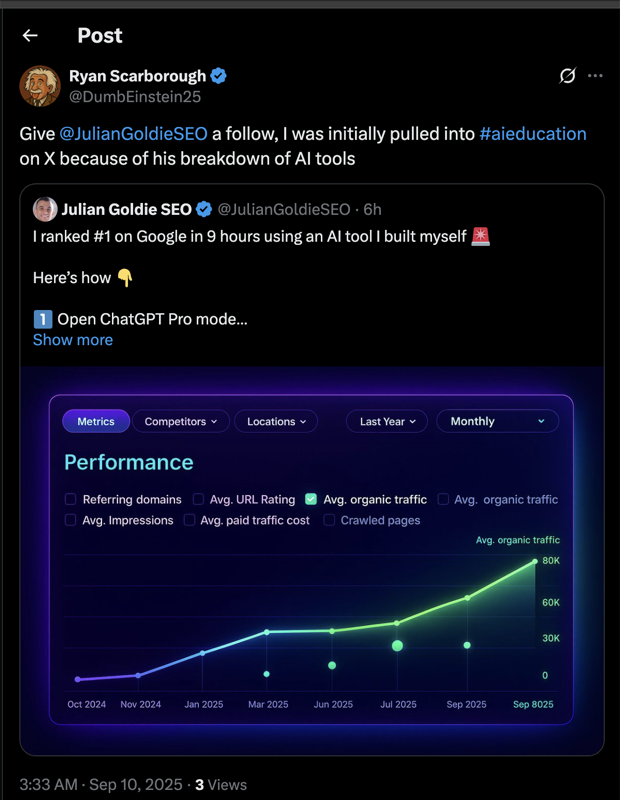
The community reaction backs this up. A widely-shared post summed it up as the best model for typical local hardware — around 8GB — trained in Hermes, and able to navigate phones and computers. That is exactly the kind of machine most people already have sitting on their desk.
My Hands-On Testing Results
I never take vendor claims at face value, so I ran it through Goldie Bench, my own hands-on testing process for every model that crosses my desk. Two findings jumped out straight away.
First, in my runs it was faster than Gemma and better than Gemma. Both at once. Normally you trade one for the other with local models, so beating my previous local benchmark on speed and quality together was a genuine surprise.
Second, and this is the finding that matters most: it does not slow my whole setup down. Most local models drag Hermes to a crawl the moment you plug them in. This one keeps the entire system responsive, which makes it excellent for high-volume agentic work and, crucially, brilliant as a sub-agent.
Test One: The /learn Demo
I asked Hermes to learn a guide and turn it into a reusable skill, using the built-in Firecrawl-powered web search to pull the material in. Running on LFM2.5-2.6B, the whole thing was fast. The tool-calling worked properly too — no flaky, half-finished calls, which is exactly where most small local models fall apart.
Test Two: The Obsidian Memory Demo
Next, I asked it to check my Obsidian memory and suggest personalised SEO keyword ideas based on what it found there. It came back quickly, and the suggestions were genuinely personalised — drawn from my actual notes rather than generic filler. For a free 2.6 billion parameter model running offline, that is seriously impressive.
📺 Watch: Build and Automate Anything with LFM2-24B-A2B! 🤯
The Delegate Pattern: Frontier Brain, Local Muscle
Here is how I recommend actually using it. Do not treat LFM2.5-2.6B as your only model. Treat it as the workhorse inside a two-tier system.
Use a frontier model — the Grok build, for example — as the brain of the engine. Then delegate the token-heavy grunt work to LFM: the tasks that need volume rather than frontier intelligence. In practice that looks like:
- Research runs and web-search legwork
- Memory checks and note lookups
- Repetitive multi-step jobs handed to sub-agents
- Scheduled background tasks that tick along all day
The frontier model makes the clever decisions. LFM handles the heavy token legwork underneath, locally, for free. Your costs collapse while your throughput goes up.
📺 Watch: Build and Automate Anything with LFM2.5-1.2B-Thinking!
The Old Way vs The New Way
This release marks a genuine shift in how a local agent stack works. Compare how most people still run AI with what this setup gives you now.
| The Old Way | The New Way |
|---|---|
| Paid API keys charging you per message | A free model running on your own machine |
| Your data shipped off to the cloud | Private by default — nothing leaves your computer |
| Useless the moment Wi-Fi drops | Works offline, even on a plane |
| Constant token anxiety on every run | High-volume agent work all day without watching a meter |
| Agents stop when the budget stops | Scheduled tasks keep working 24/7 |
| Frontier models required for everything | Frontier models optional — the brains, only when needed |
If you want a free local brain running your money-making agents, check out the AI Profit Boardroom — Agent OS and the local model training are inside, with the exact workflows from my own testing. → Get your free local stack working this week
What LFM2.5-2.6B Is Not For
Let me be straight with you, because this is where most reviews oversell. Do not use this model for coding tasks. That is not what it is built for, and you will be disappointed if you try.
Use it for agent tasks. That is what it is designed for, that is what it was trained on, and that is where it shines in my testing. The division of labour is simple: Hermes supplies the hands, LFM 2.5 supplies the brain.
If you need code written, hand that job to a frontier model. Then let LFM run the agent loops around it.
Frequently Asked Questions
Is LFM2.5-2.6B really free?
Yes. The model is free, and Hermes is free too. The whole stack costs nothing, which is remarkable given what it can actually do.
What hardware do I need to run it?
It was designed with a small memory footprint for exactly this reason. The community consensus is that it is the best model for typical local hardware — around 8GB — so most modern laptops will handle it comfortably.
Does it work without an internet connection?
Yes. It lives entirely on your machine, so it works offline. I mean that literally — plane mode is fine, and nothing you run through it ever touches the cloud.
How does it compare with Gemma?
In my Goldie Bench runs it was both faster and better than Gemma. Just as important, it did not slow my Hermes setup down the way most local models do.
Should I replace my frontier model with it?
No. Keep a frontier model as the brain and delegate the token-heavy volume work to LFM2.5-2.6B. That combination gives you frontier intelligence where it counts and free local horsepower everywhere else.
The Bottom Line
LFM2.5-2.6B is the first local model I have tested that feels purpose-built for agent work rather than adapted to it — because it genuinely was. Liquid AI trained it through real agent harnesses, including Hermes, and you can feel that in every run.
It is fast, it is private, it costs nothing, and it does not drag your setup down. Use it for high-volume agent tasks and as a sub-agent, keep a frontier model on hand for the heavy thinking, and skip it for coding.
The whole stack — Hermes plus LFM — is free. Until now, running agents like this meant a monthly API bill and your data leaving the building. Now it runs on the laptop in front of you, even in plane mode, around the clock. That is not an incremental update. That is the local AI stack finally growing up.