The DeepSeek code harness is DeepSeek's free, MIT-licensed coding harness — the open alternative to Claude Code and Codex — and it is genuinely capable of building real things: full websites, dashboards and internal tools from plain-English briefs typed into a browser tab. It launched on 13 August 2026, has already passed 115,000 GitHub stars, and sits among the fastest-growing AI projects ever. I've published a broad DeepSeek harness overview separately; this page is the hands-on companion — how I actually code with it, the workflow that works, and the honest edges I've hit along the way.
📺 Watch: DeepSeek Harness: FREE 1 Hour Course!
🔥 Get the Agent OS as a free bonus: AI Profit Boardroom members get the full Agent OS zip, prompt libraries, daily tutorials and weekly live coaching calls. → Get inside
What the DeepSeek code harness actually is
A harness is the body around a model: the interface, the file access, the tools that turn raw intelligence into finished work. Until now, the serious coding harnesses — Claude Code, Codex — lived inside a closed ecosystem. DeepSeek went the other way. The whole thing is MIT licensed, which means you can download it, change it, and build a product on top of it without asking anyone's permission.
The story behind it is remarkable. It's led by Tani Sui, who joined DeepSeek in March 2026 from Jane Street, and a team of 19 took it from a standing start in May to public release in August. Under the bonnet sits an everything-is-a-plugin architecture called Cordis — there's a published research paper on it — designed for clean reversibility. That design is why the community shipped 300+ plugins within days of launch, and a desktop version within hours. For coding specifically, the openness matters: the tool you build your workflow on today can't be taken away from you tomorrow.
Getting the harness ready to code
Setup is deliberately simple. You need Node.js on your machine, then one command in the terminal installs the harness — and that's the last time you touch the terminal. It runs at a local address on your own machine, on port 3080, in your normal browser. What you get is a chat window with a sidebar, buttons and a folder picker, not a terminal app. My install walkthrough covers every step if you want the detail.
Then you wire in a brain. The straightforward route is a DeepSeek API key — V4 Pro shipped the same day as the harness, brain and body launched together and built for each other. But you're not locked in: under Settings, then Models, then Add Provider, you can connect OpenRouter for cheap and free models, or OpenCode — and OpenCode's free models include DeepSeek V4 Flash. Free harness plus free brain equals a completely free coding stack. Ollama works too if you'd rather run models locally.
The last piece is the workspace folder: the room the harness works in. It reads, creates and changes files inside that folder and can't touch anything outside it. Give it one clean folder per project — not your whole desktop.
Want to watch this rather than read it? Inside AI Profit Boardroom I've recorded a full DeepSeek Harness Masterclass — the setup, the briefs and the complete builds from this article, screen by screen, so you can code along with me.
📺 Watch: DeepSeek Harness VS Claude Code
The coding workflow: briefs, code mode and real builds
Every build I run starts with the same three-part brief, written in plain English: what to look at, what to produce, and what rules to follow. That's it. Point it at the files that matter, describe the finished thing, set the constraints. It's the same briefing discipline that runs my whole Agent OS, and it transfers to the harness perfectly.
For anything complex, switch on code mode — the preset that unlocks the heavier building powers for multi-step builds. It sits at the opposite end of the dial from minimal mode, which I've covered separately for lighter jobs.
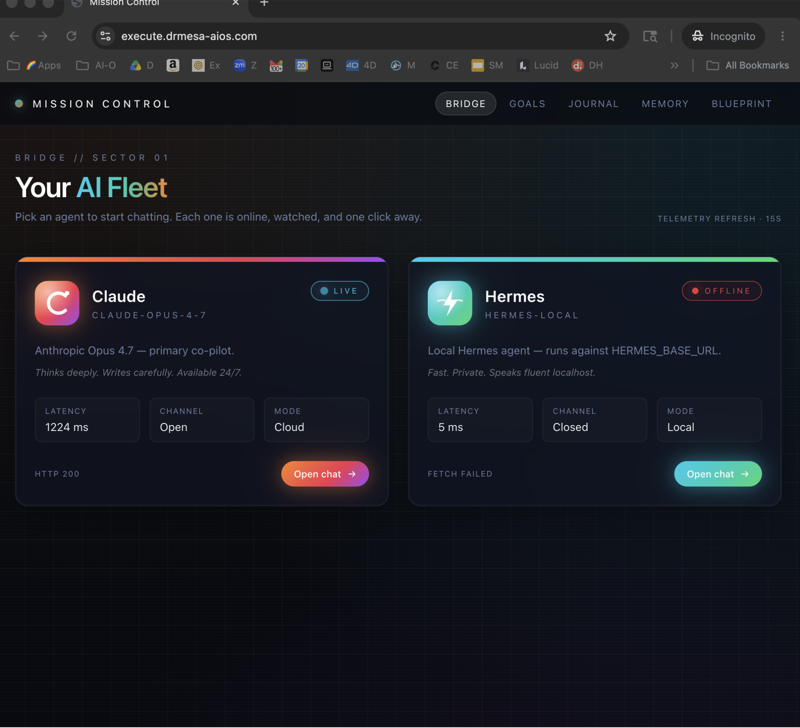
Two real builds from my course show the range. First, a full agency website: I gave it a plain-English brief plus my local Obsidian folder as context, and it built the site from what it read there. Second, a complete mission-control dashboard for the harness itself, from one prompt. It ran autonomously — I went to the cinema, came back, and it was finished. That second build changed how I think about delegation: the brief was the work, and the building happened without me.
Running parallel coding sessions in the same folder
Here's the multiplier most people miss: the harness lets you run multiple sessions coding in the same workspace folder in parallel — several agents building different features at once. One session on the pricing page, one on the blog templates, one wiring up the forms. My rule is to scope each brief tightly so every session owns its own corner of the project; do that and the folder fills up from three directions at once. It's the closest thing I've found to hiring a small dev team for nothing.
The trajectory view: debugging builds step by step
This is the killer feature for code work, and the reason the DeepSeek code harness has earned a permanent slot in my stack. Every session produces a trajectory: every step laid out in order, each one clickable. The system prompt. The context it loaded. Its actual reasoning, in full. Every tool call, the exact command it ran, the exact payload and result, how long each step took, how many turns the job needed. Nothing is hidden.
That changes debugging completely. When a build breaks, you don't guess — you scroll the trajectory to the exact step that went sideways. It grabbed the wrong folder. It misread one line of the brief. It created an empty file. You fix that one thing and re-run. Closed tools make you infer what happened; this one shows you.
You can also export any session as a zip with the complete log. I review agent work the way a manager reviews a report: open the trajectory, check the decisions, sign it off. Once you've worked this way, going back to a black box feels careless.
Choosing a model for coding: V4 Pro vs V4 Flash
Model choice matters more for coding than for anything else I do with the harness. V4 Pro is the frontier-level flagship and it's fantastic for building — I've written up why V4 Pro is the best brain for this harness. V4 Flash is cheap and brilliant for volume, but it's not as smart. My split is simple: Pro for builds, Flash for grunt work. And before I trust any brain with a serious project, my Goldie Bench habit kicks in — I run the same build task across several models and compare the results before committing to one.
📺 Watch: DeepSeek's New AI Harness Changes Everything
Honest caveats before you build on it
Let me be straight with you: this is a v0.1 developer preview, and it behaves like one. Expect bumps. Plugins can break between versions — the everything-is-a-plugin design cuts both ways, shipping fixes fast and occasional breakage faster. My advice is to build real projects with it now, because that's how you learn the harness, but don't wire your whole operation to it this week as though it were finished software. Treat it like a very talented junior: brilliant output, needs supervision, improving weekly.
Coding jobs and how the harness handles them
Here's how the day-to-day coding jobs map onto the harness in practice.
| Coding job | How the harness handles it |
|---|---|
| Build a site or app from scratch | One clean workspace folder, a three-part plain-English brief, code mode switched on |
| Long multi-step build | Runs autonomously to completion — my dashboard finished while I was at the cinema |
| Several features at once | Multiple parallel sessions coding in the same folder |
| A build that breaks halfway | Trajectory view — click to the exact failed step, fix it, re-run |
| Reviewing the work | Export the session as a zip with the complete log and read it like a report |
| Coding at zero cost | Free MIT harness plus OpenCode's free DeepSeek V4 Flash |
DeepSeek code harness FAQs
Is the DeepSeek code harness really free?
Yes. The harness itself is MIT licensed — free to download, modify and even build a business on. Pair it with OpenCode's free models, which include DeepSeek V4 Flash, and the entire coding stack costs nothing. You only pay if you choose a paid API such as V4 Pro. I've broken the costs down fully in is the DeepSeek harness free.
Can it replace Claude Code?
Honestly: for plenty of coding work it already can, and the price is unbeatable — but Claude Code is more mature, and I still run it daily with the Hermes agent for certain jobs. This page isn't the head-to-head; I've written that up properly in DeepSeek harness vs Claude Code. Short version: keep both for now and let results decide.
Do I need to be able to code?
No. You brief it in plain English in a browser window, pick a workspace folder with a button, and read what happened in the trajectory view. Being able to read code helps you check the work, but writing it yourself isn't required for any workflow on this page.
Which model should I use for coding work?
Start with V4 Pro for anything you care about — it's the flagship the harness was built alongside. Use V4 Flash for high-volume grunt work where cost matters more than brilliance, and Ollama if you want everything running locally on your own machine.
My verdict on coding with the harness
For me the maths is simple. A free, open, MIT-licensed coding harness that takes plain-English briefs, runs autonomous multi-step builds, parallelises across sessions and shows you its full working in the trajectory view — that's not a toy, that's leverage. It's v0.1, so calibrate your expectations, but the direction of travel is obvious and a community of thousands is compounding it daily.
If you want the fastest route from reading to shipping: join me inside AI Profit Boardroom, where the DeepSeek Harness Masterclass walks you through the agency-site build and the mission-control dashboard end to end — my exact briefs, my workspace setup, and the debugging passes in the trajectory view. Build your first project with the harness this week, alongside people doing the same.