Grok Bot vs PaperClip is a category clash, not a feature war — Grok Bot rents you an always-on AI teammate with its own cloud computer, while PaperClip is the free, open-source org chart you run locally to manage the agents you already own — and which one wins depends entirely on whether you want to hire a worker or run a company. Here is how I know each side. My Grok Bot knowledge is documentation-based: I read SpaceXAI's official launch post, product page and FAQ line by line for my Grok Bot deep read, and everything below sticks to what those docs actually say. My PaperClip knowledge is hands-on: it is installed on my machine right now, running named agents with real budgets and schedules for my business. Keep that split in mind, because it shapes everything that follows.
📺 Watch: PaperClip + Hermes Just Changed Everything
🔥 Get the Agent OS as a free bonus: AI Profit Boardroom members get the full Agent OS zip, prompt libraries, daily tutorials and weekly live coaching calls. → Get inside
These two tools sit at opposite ends of the agent world. Grok Bot is a managed cloud service you pay for and trust to do work on a computer you never touch. PaperClip is open-source software you install, configure and own outright. Comparing them is less like comparing two laptops and more like deciding between hiring a contractor and incorporating a company.
What Grok Bot Actually Is, According to Its Own Docs
Grok Bot launched in early beta on 11 August 2026, and SpaceXAI's pitch is simple: AI teammates, not chatbots. Each Bot gets a persistent cloud computer with its own browser, filesystem and terminal. It signs into your tools and websites, does the work inside them, and lands finished output in the real tool, coming back only when it needs approval. You message it from the desktop app or your iPhone and keep one continuous thread across devices. Close the laptop and the work keeps going, because none of it runs on your hardware. That persistent cloud computer is the whole product.
The docs add detail that matters for this comparison. Teach-a-task recordings let you show a Bot a workflow once and turn it into a repeatable routine, with a ten-minute recording cap. Passwords, two-factor codes, CAPTCHAs and payments always require human takeover — the Bot hands the wheel back rather than touching credentials itself. Launch platforms are macOS, Windows and iPhone on iOS 18 or later — no Linux desktop, no Android, no iPad. Cloud data storage is required, there is no model picker, and it is a paid product — eligible plans and list prices live on the official pricing page, so check there rather than trusting quoted numbers during a moving beta.
One more line from the official documentation deserves keeping in full view: every Bot on an account shares one computer — the same files, cookies and logins — and SpaceXAI explicitly says not to treat separate Bots as a security boundary. That is their own FAQ being commendably honest, and it matters again shortly.
Quick context stop: operators stress-test agent claims like these against real workloads every day inside the AI Profit Boardroom — 3,000+ members comparing notes on which agents actually ship work, at $69 a month locked in (normally $110).
📺 Watch: Hermes Bot Mode DESTROYS Grok Bot? (FREE!)
What PaperClip Actually Is — I Run It Every Day
PaperClip is the multi-agent org chart: one dashboard where every agent is a named role with a job description, a goal, an adapter, a schedule and a budget, all aligned to a single top-level company mission you set once. Mine is growing the AI Profit Boardroom, and under that mission sits a CEO, a CMO, a Lead Engineer, an SEO Specialist and a Content Writer — each one an agent with its own remit. The org structure is not a marketing metaphor; it is the interface. You manage agents the way you would manage staff, by role and goal rather than by one-off prompt.
The flow that sold me is recommend-then-approve hiring. The CEO agent plans against the mission and drops recommendations into an inbox — fully-formed proposals for new agents, each with a job description and a suggested adapter — and nothing exists until I approve it. When I compared PaperClip with Multion, that flow was a big part of why PaperClip won on control, clarity and stability: the org grows deliberately, one approved hire at a time, instead of sprawling on its own.
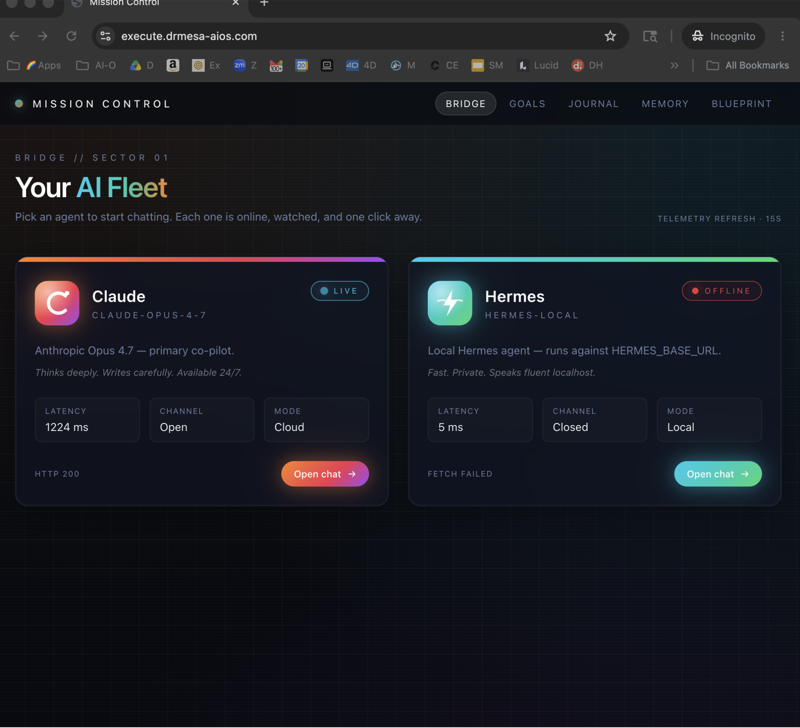
Adapters are the killer feature. Each role runs on whichever brain fits the job: Claude for strategy, Hermes through its own adapter, OpenClaw for SEO, Codex for engineering, Cursor for complex dev work. Different agents, different models, one org. And the whole thing is open source with a public GitHub repo and a standard local install — I had Claude Code install and boot it on localhost, and the full build is written up in my hands-on PaperClip and Hermes walkthrough.
📺 Watch: OpenMausBot DESTROYS Grok Bot?
Grok Bot Vs PaperClip: The Seven Dimensions That Matter
The Grok Bot column below is what the official docs state; the PaperClip column is what my own install does.
| Dimension | Grok Bot (per the docs) | PaperClip (hands-on) |
|---|---|---|
| Where work runs | Its own persistent cloud computer — browser, filesystem, terminal | Your machine, your accounts, your localhost |
| Cost | Paid plans; list prices on the official pricing page | Free open source; you pay only what your adapters bill |
| Control and visibility | Shared bot computer plus human-takeover checkpoints | Every budget, schedule and decision visible in one local dashboard |
| Models | No model picker | Five adapters — Claude, Hermes, OpenClaw, Codex, Cursor — chosen per role |
| Platforms | macOS, Windows, iPhone (iOS 18+) | Anywhere you can run a local install |
| Autonomy shape | One always-on teammate finishing jobs end to end | An org of scheduled, budgeted specialists under one mission |
| Security posture | One shared computer for files, cookies and logins — their docs' own caveat | Credentials never leave your setup |
Walk the table top to bottom and the pattern holds. Where work runs is the deepest split: Grok Bot's entire value is that the cloud computer is not yours — close the laptop, the agent keeps working — while PaperClip's entire value is that everything is yours, from the runtime to the logins. Cost follows the same logic. Grok Bot bundles compute, models and infrastructure into a subscription, while PaperClip charges nothing itself; your real spend is whatever each adapter bills, which you cap per agent with budgets.
Models and autonomy shape are where the org concept earns its keep. Grok Bot offers no model picker — the docs simply do not provide one — so you trust its routing the way you trust an employer-issued laptop. PaperClip lets me put Claude on strategy and Codex on engineering inside the same org, which is exactly the multi-brain pattern I benchmark in Goldie Bench. And the autonomy shapes are different animals: one continuous cloud teammate versus a scheduled staff of specialists. Both are circling the agent-desktop idea I unpacked in the agent screen pattern — an agent with its own computer to work on — they just park that computer in different places.
The Security Paragraph Both Tools Deserve
Here is the factual version, no fear-mongering. Grok Bot's own documentation says every Bot on an account shares one computer for files, cookies and logins, and explicitly tells you not to treat separate Bots as a security boundary — and to its credit, the same docs force human takeover for passwords, two-factor codes, CAPTCHAs and payments, so the highest-stakes moments stay in your hands. PaperClip's posture is structural rather than procedural: agents run on your machine against your own accounts, so credentials never leave your setup, and the trade is that you are now the security team. A cloud vendor patching one shared computer versus you owning your entire local surface — neither is risk-free; they are different risks, and knowing which one you would rather manage is half the decision. I said the same when comparing Hermes Bot and Grok Bot: read the vendor's own caveats before you read anyone else's hype.
Who Picks Which — And the Case for Running Both
If you are a solo operator who wants zero infrastructure — no installs, no adapters, no localhost — Grok Bot is the lean answer: message a teammate, get finished work landed in your real tools, never think about the machinery. If you are already running Claude, Hermes or Codex locally, PaperClip is the obvious move, because it turns the agents you already pay for into an organized company instead of a pile of terminal windows. My stack sits firmly in the second camp — see my best Hermes setup for how the pieces fit, and the Agent OS guide for the operating layer underneath it all.
Here is what most comparisons miss: these are not substitutes, so coexistence is a legitimate strategy. Nothing stops you treating a Grok Bot as one hire — the always-on cloud generalist on your org chart — while PaperClip remains the org around your local specialists. Rent-a-teammate and run-your-own-company answer different questions, and plenty of operators will eventually answer both. If you want a second pair of eyes on which shape fits your business, book a free strategy session and I will map it with you.
Grok Bot and PaperClip: Quick Answers
Is PaperClip free?
Yes. PaperClip is open source with a public GitHub repo and a standard local install — Claude Code set mine up on localhost in one session. The software costs nothing; your real costs are whatever the adapters you attach bill for usage, and PaperClip's per-agent budgets exist precisely to keep that spend visible and capped.
Does Grok Bot let me choose models?
No — per the official docs, there is no model picker. You get whatever SpaceXAI runs behind the teammate, bundled into the paid plan. If choosing a different brain per role matters to you, that is PaperClip's adapter system in a nutshell, and it is the sharpest functional difference between the two.
Can I use both?
Yes, and it may be the sophisticated play: a Grok Bot as your always-on cloud hire for end-to-end jobs, PaperClip as the org chart governing your local agents with missions, schedules and budgets. They compete for your workflow philosophy, not for the same slot in your stack.
Wherever you land on the hire-a-worker versus run-a-company question at the heart of Grok Bot vs PaperClip, decide it alongside people who are actually shipping. Inside the AI Profit Boardroom, 3,000+ operators are testing agents like these against real businesses every week — $69 a month locked in, normally $110. If you would rather have the roadmap built with you, grab a free strategy session and we will design your agent org together — whether your first hire is a Bot in the cloud or a CEO on your localhost.