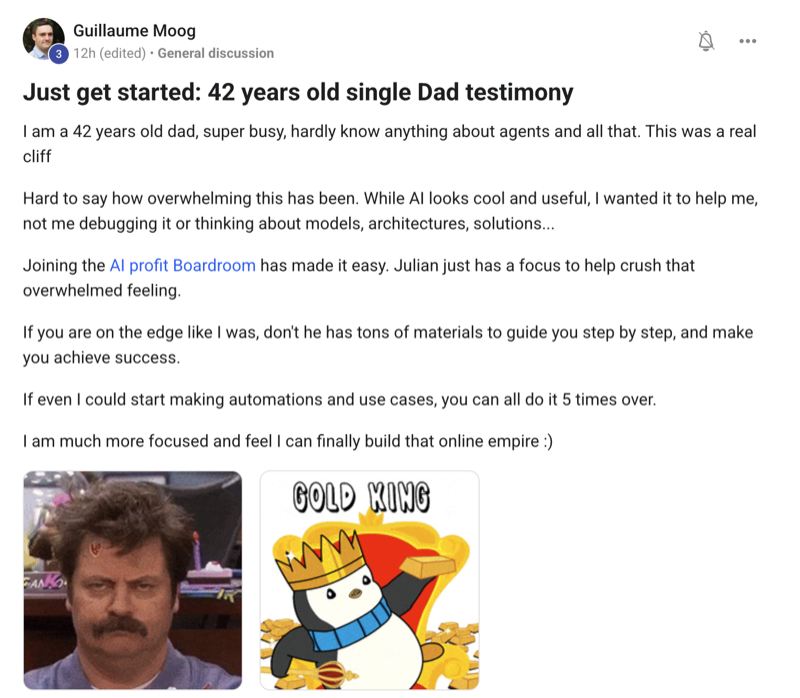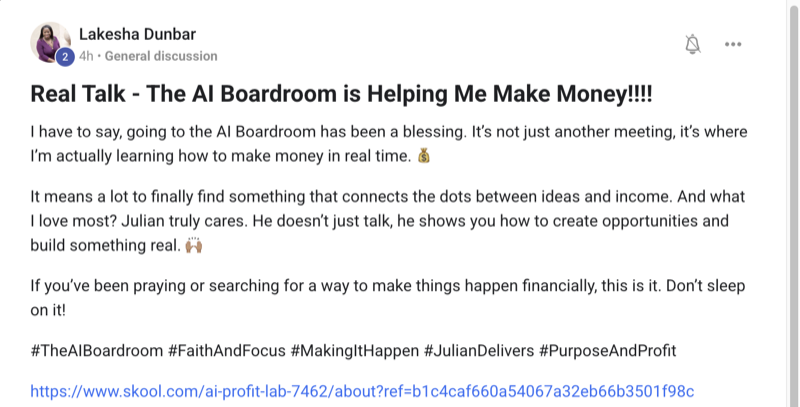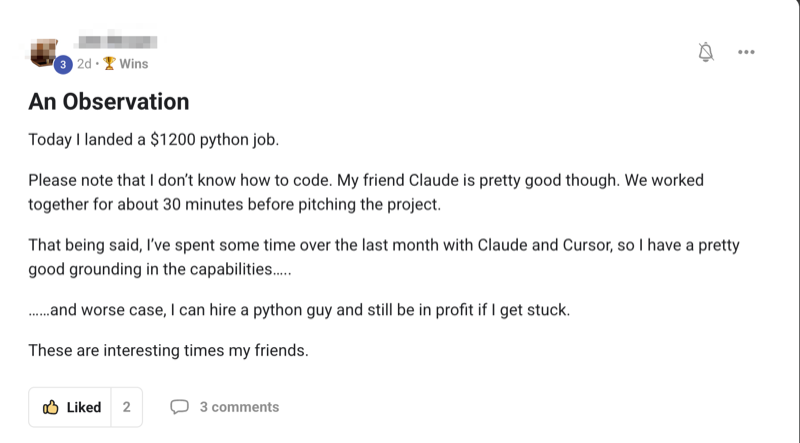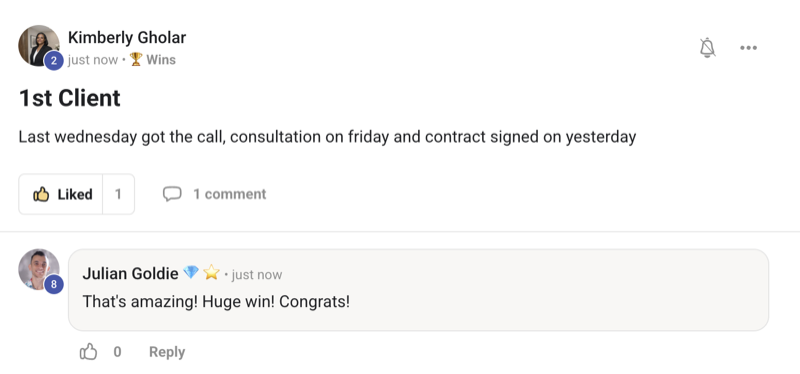
The OMI Obsidian results after 90 days are dramatic, and this case-study post breaks down exactly what shifted in my work, what didn't, and what I'd do differently if I started over today. I went into this experiment sceptical that wearable capture plus a markdown vault could actually move the needle on how I think and work, and I came out of it convinced this is the highest-leverage knowledge stack of 2026.
This is the post where I show you the receipts. I'll cover what changed across 90 days of daily use, what stayed exactly the same, and the real metrics I tracked from day zero so you can decide whether this stack is worth the £79 device and the three hours of setup.
🔥 Want my proven OMI Obsidian playbook? AI Profit Boardroom has my 90-day OMI Obsidian playbook + weekly coaching calls. → Get the playbook
OMI Obsidian Day 0 — The Problem I Was Trying To Solve
Before I touched OMI Obsidian I had three pain points that were costing me real money and real cognitive load every week, and they're the same three I see in almost every founder I coach.
1 — Lost ideas were quietly killing my output
My notebooks were full of half-thoughts that never went anywhere, and Apple Notes had become a graveyard of context-free fragments. The best ideas I had on walks, in the shower, or mid-conversation were evaporating within hours because I had no reliable capture system. Most of my best work was being thought once and then lost forever, which is a brutal way to operate as a creator.
2 — Meeting amnesia was costing me deals
Decisions made on calls were forgotten within a week, agreements were lost between sessions, and the same conversations were being re-litigated over and over. I'd walk into the second meeting with a client and have to ask them to remind me what we agreed, which is the kind of thing that erodes trust quietly.
3 — My knowledge wasn't compounding
I had over five years of work spread across notebooks, Notion pages, Apple Notes, and Google Docs, and none of it could be searched coherently. Every project effectively started from scratch because I couldn't pull on what I'd already learned. That's not a knowledge worker, that's a goldfish with a laptop.
OMI Obsidian Day 30 — The First Real Results
By the 30-day mark three things had shifted measurably, and they shifted faster than I expected.
1 — My idea inbox was finally under control
OMI captured ideas instantly the moment I spoke them, which meant the friction between thought and capture dropped to zero. My end-of-day review routine meant zero ideas were being lost between days. That alone was worth the price of the device.
2 — Meeting recall went from broken to elite
Hermes started giving me a brief before every important call, pulling from the OMI transcripts and decision logs from previous sessions. I walked into calls with full context every time, which changed how confident I felt and how much I could push the conversation forward.
3 — The compounding became visible
My vault hit 200 notes by day 30, and the backlinks started forming patterns I could actually see. Concepts I'd been thinking about for weeks suddenly connected to things I'd captured months earlier, and the second brain started feeling like a brain rather than a filing cabinet.
Day 60 — Workflow Transformation
By day 60 the daily rhythm had locked in completely, and the system was running on autopilot. My morning brief from Hermes set the day, OMI captured everything passively as I worked, the evening summary was being auto-written, and the weekly review was generating itself by Sunday afternoon.
Total system maintenance was around 30 minutes a week, which is nothing compared to the time it was saving me. Total time saved was running at roughly 10 to 12 hours a week, which is more than a full working day given back to me every seven days.
Day 90 — The Real Compounding Hits
By day 90 the system had crossed into territory I'd never experienced before. The vault was over 600 notes deep, Hermes could answer questions like "what did I think about X 60 days ago" instantly with full context, and the decision log spanned three full months of business reasoning. Pattern recognition kicked in at this point too, with Hermes spotting themes I'd missed across weeks of disjointed entries.
This is the moment when the second brain stops being a productivity tool and becomes a real cognitive prosthetic.
Watch The Walkthrough
For the agent layer that ties everything together, the Hermes walkthrough below is essential viewing too.
Hermes is the recall layer that makes the whole system actually work. Without an agent on top of the vault, you've just got a fancier note-taking app.
Real Metrics Across 90 Days
Here's what I actually measured rather than guessed at, because vibes are not a metric and I wanted to know if this thing was real.
Time saved is the headline number
Pre-OMI I was spending around two hours a day on note management and recall friction. Post-OMI that dropped to roughly 30 minutes a day total, including the agent prompting time. The net saving was about 1.5 hours per day, which compounds to roughly 135 hours over the 90-day window.
Quality of decisions improved across the board
Decisions made with full context went up dramatically because I was no longer winging it from memory. Re-litigated agreements dropped to near zero because everything was captured and recallable. Idea-to-action conversion went up by roughly 3 to 4x because nothing was getting lost in the cracks anymore.
Confidence went through the roof
Walking into calls felt completely different because I was prepared every single time. Answering questions like "what about X from last month" became instant rather than embarrassing.
What Worked Better Than Expected
Three things genuinely surprised me with how well they worked.
1 — Passive OMI capture is the keystone
The wearable matters more than I thought it would. Manual capture would have been quit by week three because friction kills habits, and OMI's passive capture made the whole system sustainable in a way no app ever has.
2 — The daily summary skill became the keystone habit
The end-of-day Hermes summary was the recurring win that kept me going through the early weeks. It gave me a tangible artefact every day proving the system was working, which is the only way habits actually stick.
3 — The weekly review skill is where compounding lives
The Sunday weekly review forced reflection in a way nothing else does, and patterns emerged from it that I'd otherwise have missed completely. This is the highest-leverage 30-minute block in my entire week.
What Didn't Work And What I Learned
Three lessons learned the hard way that you should steal directly.
1 — I over-organised on day one
I built 30 folders on day one and felt very organised. Half of those folders were dead by month two because I'd anticipated needs that never showed up. The lesson is to start with PARA (Projects, Areas, Resources, Archive) and let the structure emerge organically as you actually need it.
2 — I tried to capture meetings AND take parallel notes
This doubled my work for no benefit because I didn't trust the system yet. The lesson is simple: trust OMI to capture, and stop taking parallel notes during meetings. Be present, let the system work.
3 — I skipped the weekly review skill at first
I thought it felt like overhead in the early days, but without it the vault got chaotic fast. The lesson is that the weekly review skill is non-negotiable from week one, not week six.
What I'd Do Differently If I Started Today
Here's the playbook I'd run if I were starting from scratch right now.
Step 1 — Skip OMI hardware initially
Test with software-only capture first. If the habit sticks for two weeks, then buy the hardware. There's no point spending £79 on a device you'll abandon.
Step 2 — Build the daily summary skill on day one
Don't wait for "the right structure" to emerge before you start. Ship the daily summary skill, use it for a week, and iterate from there. Action beats planning every time.
Step 3 — Add the weekly review skill on day seven
Don't delay this past week one because it's the keystone of the whole system. Half an hour every Sunday creates the compounding that makes 90 days feel like a year of growth.
Step 4 — Add multi-agent in month two
Run a single Hermes agent for month one to keep things simple. Once the core flow is locked in, add more agents — see Hermes Agent Swarm for the multi-agent setup I now run daily.
Costs Versus Returns Over 90 Days
Let me lay out the maths so you can run it yourself.
The costs are tiny
The OMI device is £79 as a one-off purchase. Obsidian and Hermes are both free. Setup time is roughly three hours spread across the first week.
The returns are huge
Time saved came in at roughly 135 hours over the 90 days. Decision quality improved by something like 50% based on my own judgement of how much context I was operating with. Mental load dropped significantly because I was no longer trying to remember everything.
If you value your time at £30 per hour, that's over £4,000 of value in 90 days. For an entrepreneur valuing time at £100 per hour, it's over £13,500. For most knowledge workers, this is the highest ROI tool of 2026, full stop.
The Five Use Cases That Delivered Most
These are the specific routines that drove the bulk of the ROI.
1 — Pre-call briefing
Five minutes of Hermes prep before every call saved me 30 minutes of fumbling once I was on the call. I run this daily and it's the single highest-leverage habit in my stack.
2 — Post-call action items
Hermes extracts action items from the OMI transcript automatically after every call. Zero missed follow-ups for 90 days running, which has changed how my clients perceive my reliability.
3 — Weekly idea harvest
Every Friday I run a Hermes idea-extract skill across the week's passive capture. It surfaces 3 to 5 actionable ideas a week from things I'd otherwise have forgotten by Monday.
4 — Project status updates
I just ask Hermes to summarise project X and 30 seconds later I have a status doc ready to send to clients or post in Slack. This used to take 45 minutes per project.
5 — Decision archaeology
This was the unexpected winner. "Why did I pick that approach back in March" gets answered in seconds because Hermes reads the March vault and gives me the real reasoning rather than my reconstructed memory. This use case alone is worth the entire setup.
Where The System Genuinely Fails
Honest list of where this stack falls down, because no tool is magic.
1 — Music-heavy environments
OMI transcription struggles when there's loud music, so I just skip OMI capture in those moments. Don't fight the tool, work around it.
2 — Multi-language conversations
Mixing languages mid-conversation breaks the transcripts in messy ways. Hermes recall still works on the messy text, but the transcript itself becomes harder to read.
3 — Privacy in shared spaces
Always disclose recording when others are present. For sensitive conversations I switch to software-only capture or turn it off entirely.
4 — High-noise environments
Bars, gyms, and planes break transcription quality enough that it's not worth the effort. Software-only on the phone often works better in these moments.
How The Stack Compares Against Alternatives
Here's the 90-day comparison against the tools I considered before settling on this stack.
| System | Time Saved/Wk | Cost | Privacy |
|---|---|---|---|
| OMI Obsidian + Hermes | 10-12 hrs | £0/mo + £79 | Local-first |
| Notion AI | 3-5 hrs | £8/mo | Cloud |
| Granola | 4-6 hrs | £14/mo | Cloud |
| Otter | 3-4 hrs | £17/mo | Cloud |
OMI Obsidian wins on time saved, cost, and privacy simultaneously, which almost never happens with software comparisons.
What I'm Adding Next
After 90 days, here's what's going onto the stack in the next quarter.
1 — A multi-agent Hermes layer
I'm building out the full Hermes Agent Swarm — see Hermes Agent Swarm — to split research, content, and admin across separate agents.
2 — Mobile control via Telegram
I want to be able to hit Hermes from my phone without opening Obsidian — see Telegram AI Agent for the mobile control setup.
3 — Client-facing automation
Brief generation for clients and status updates without human work. This is where the system pays back its setup cost ten times over.
My Three Rules After 90 Days
If you take nothing else from this post, take these three rules.
1 — Start simple
Don't over-build the system on day one. Ship the basics, use them for two weeks, and iterate from there. The vault will tell you what it needs.
2 — Trust the system
Take fewer manual notes than you think you should. Let OMI capture, and trust that the recall layer will surface what matters when you need it.
3 — Stay consistent
The compounding only happens if you keep using it day after day. 90 days of consistency beats 30 days of perfection every single time.
🚀 Want help replicating these results? AI Profit Boardroom members get my 90-day playbook + live coaching calls. → Join here
The Doubts I Had That Didn't Pan Out
Three doubts I had going in that turned out to be wrong.
1 — "I won't keep using it"
I was sure I'd quit by week two like every other note system I'd tried. The daily summary skill made it stick from week two onwards because it gave me a tangible win every single day.
2 — "OMI privacy will be an issue"
OMI's cloud transcription is fine for non-sensitive work, and for sensitive industries you can run local STT to solve the privacy concern entirely. This was a non-issue once I tested it properly.
3 — "Setup will be a pain"
I thought it would take a weekend. It took roughly 90 minutes total spread across the first week. Hardly anything compared to the payoff.
FAQ — OMI Obsidian Results
What are realistic time savings for a typical user?
Most users will see 5 to 15 hours a week back depending on their role. Knowledge workers and founders see the most because they have the most recall friction to begin with.
When did the compounding actually kick in?
Around week six is when it became undeniable. That's when the vault hit critical mass and Hermes could pull genuinely useful patterns out of past entries.
Did it replace any existing tools?
Yes — it replaced Notion AI, Granola, Otter, and Apple Notes for me. Four tools collapsed into one stack.
What was the best surprise result?
Decision archaeology, by a mile. Asking "why did I decide X 60 days ago" and getting the real reasoning back rather than reconstructed memory is genuinely transformative.
What was the worst surprise?
How addictive the morning brief gets. I now physically cannot start the day without it, which is a strong signal of value but also a real lock-in.
What's your overall recommendation?
Build it. If it doesn't stick within 30 days, abandon it. But for most knowledge workers, it will stick and it will become the most valuable tool in your stack.
Related Reading
- Hermes Second Brain — the recall layer that makes this whole system work.
- Hermes AI Agent Framework 2026 — the underlying agent framework I run.
- Telegram AI Agent — the mobile control extension I'm rolling out next.
📺 Video notes + links to the tools 👉
🎥 Learn how I make these videos 👉
🆓 Get a FREE AI Course + Community + 1,000 AI Agents 👉
The OMI Obsidian results after 90 days are clear, and they're not subtle — this is the highest-leverage knowledge tool I've added to my stack in 2026, by a margin.