OpenClaw 2026.9.5, released on 19 September 2026, is the version where OpenClaw stops behaving like a single-agent tool and starts behaving like a team product: guided setup for specialist agent teams, a new Agents overview, session forking, plugin hot reloading and Atomic Updates all land in one release. The openclaw 2026.9.5 release notes on the official OpenClaw documentation site list changes drawn from 64 direct commits and 4,179 pull requests by 503 contributors, per the project's GitHub release listing — and this page walks you through the ones that actually change how you work.
📺 Watch: I Tested OpenClaw 2.0 Browser Use… Here’s the Truth
🔥 Get the Agent OS as a free bonus: AI Profit Boardroom members get the full Agent OS zip, prompt libraries, daily tutorials and weekly live coaching calls. → Get inside · Want AI SEO help 1-on-1? Book a free SEO strategy session →
A quick note on sourcing before the detail: everything below comes from the official release notes at docs.openclaw.ai and the project's GitHub releases page, both checked on 22 September 2026. Where the notes give exact wording, it is quoted. Where they are silent — on benchmarks, on specific new model support — that silence is flagged rather than filled in.
OpenClaw 2026.9.5 Release Notes: The Headline Changes
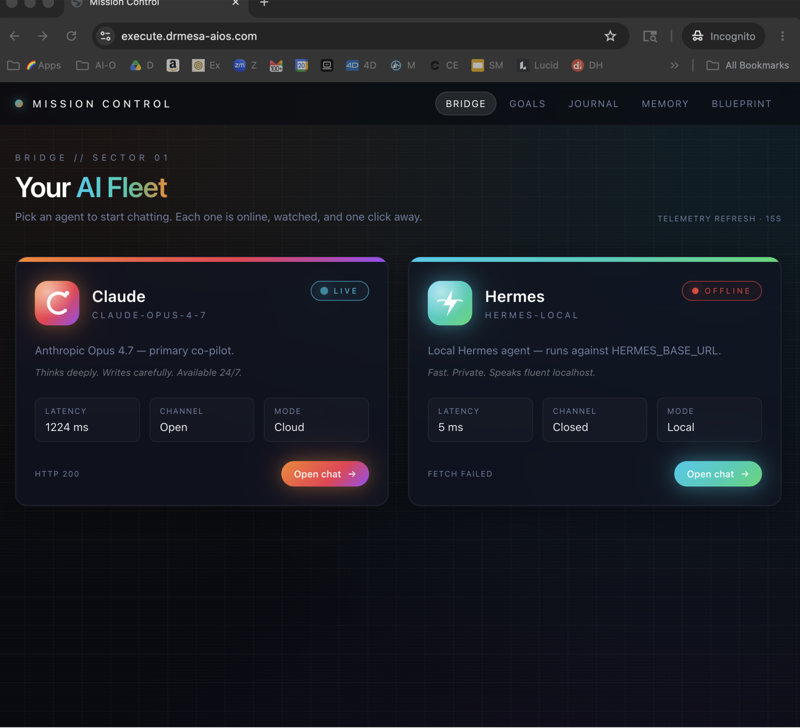
The centrepiece of the openclaw 2026.9.5 release notes is the guided setup for specialist agent teams. Instead of configuring one general-purpose agent and stretching it across every job, the installer now walks you through creating a roster of specialists — chief of staff, researcher, writer and reviewer — with generated avatar selection during agent creation. That is a meaningful shift in how the project thinks: the team, not the agent, is becoming the unit of work. It mirrors the multi-agent pattern covered in the OpenClaw mission control write-up, where one coordinating agent directs others, but now the roster concept is built into onboarding itself.
Around that centrepiece, the Web UI grows a new Agents overview with recent activity and conversation previews, plus a team sidebar that groups conversations by agent. If you run more than one agent, this fixes a genuine pain: conversations were previously easy to lose track of across a busy workspace.
Collaboration: Sharing, Forking And Comments
The collaboration set is the second big theme. The release adds read-only conversation sharing, conversation archiving, and session forking with workspace preservation — meaning you can branch an agent session and keep the files it was working with, rather than starting the workspace from scratch. Shared sessions also show live drafts labelled "Typing · not sent", and a new chat comment feature lets you attach comments to selected passages of a conversation. Markdown attachments now render as formatted documents, and research output gains source citations with preview cards — a welcome move for anyone using an agent for research they need to verify. The direction of travel is clear: OpenClaw sessions are becoming shareable artefacts you review with other people, not private terminal scrollback.
Smaller quality-of-life items round out the interface work: a device picker with capacity details when you start a new session, message queuing while chat history loads, split-chat window improvements, plugin page reordering in the sidebar, custom SVG artwork for sessions and agents, and emoji shortcode suggestions that convert text codes as you type. Individually minor, together they signal a Web UI that is getting daily-driver polish rather than occasional attention.
If you want to skip the trial-and-error phase and copy agent team setups that already make money — with prompt libraries, daily tutorials and weekly live calls — check out the AI Profit Boardroom → see what members get. Prefer 1-on-1 help with your SEO first? Book a free SEO strategy session and get a personal plan.
Technical Changes: Hot Reloading, Atomic Updates And Performance
For anyone running OpenClaw as infrastructure rather than a toy, three technical items in openclaw 2026.9.5 matter most. First, plugin hot reloading: the notes describe "plugins you can install without restarting your Gateway", which removes the most annoying interruption in daily use — an agent that has to go down to gain a capability. Second, "Atomic Updates that check the next version before switching over", so an upgrade validates itself before it replaces your working install. Third, performance work: large session lists are faster, memory leaks in session list management are fixed, and frame transmission is now uncompressed for bandwidth transparency.
The install side gets quieter but real improvements too: better command-line installation recovery across platforms, FreeBSD CLI support via system Node and npm, Docker containers with workspace file visibility, and device pairing with clearer guidance and QR code setup. None of these is glamorous; all of them reduce the odds a new user bounces off the install, which has historically been the project's weakest point — something the OpenClaw desktop app route was often recommended to avoid.
What The Release Notes Do Not Say
Two silences are worth naming so you do not fill them with assumptions. The published notes for this version do not detail new model or provider support — so if you are waiting on a specific model integration, check the project's changelog directly rather than assuming it shipped here. And no benchmark claims appear in the notes at all: this is a workflow-and-stability release, not a capability release. For how the models you plug into OpenClaw actually compare on agent tasks, the Goldie Bench write-up covers hands-on comparisons across the current field, and the OpenClaw roadmap covers where the project has said it is heading next. The notes also emphasise backward compatibility, with no explicit breaking changes documented — existing configurations are preserved.
Should You Upgrade To OpenClaw 2026.9.5?
Yes, and sooner rather than later. The memory leak fixes and session list performance work alone justify it for anyone with weeks of accumulated sessions, and the Atomic Updates mechanism means this and future upgrades verify themselves before switching over — the upgrade path itself is now safer than it used to be. The release landed on 19 September 2026 with signed source validation and verified npm and Docker publication, per the GitHub release page, alongside 90 npm plugins and 3 companion packages.
If you are still on a much older build, it is worth reading what changed in between: the OpenClaw 4.20 update covers an earlier milestone release, and features like OpenClaw memory persistence and OpenClaw computer use have their own guides if this release is your prompt to finally set them up properly. If you are choosing between agents rather than upgrading one, the Hermes vs OpenClaw comparison is the honest starting point.
Common Questions
When did OpenClaw 2026.9.5 come out?
19 September 2026, at 01:55 UTC according to the GitHub release page. A 2026.9.4 release preceded it on 11 September, so the project is currently shipping stable tags roughly weekly.
Is OpenClaw 2026.9.5 free?
OpenClaw itself is open-source and free to install; this release changes nothing about that. Your running costs remain whatever the models you connect to it charge — a local model costs hardware, a cloud model costs API fees.
Does the update break existing setups?
The release notes document no breaking changes and emphasise preservation of existing configurations, and the new Atomic Updates mechanism checks the next version before switching over. As with any infrastructure you rely on, upgrade a test install first if your agents are doing revenue-critical work.
What is the fastest way to try the new team setup?
Run the guided setup on a fresh install and let it build the specialist roster — chief of staff, researcher, writer, reviewer — rather than hand-rolling your own configuration on day one. You will learn the intended structure faster by using it than by reading about it. The same team-of-specialists idea is the backbone of the Agent OS, which turns that structure into a full operating system for your agents with defined roles, memory and workflows.
Verdict: A Team Product Now
Version 2026.9.5 is not the flashiest OpenClaw release, but it is one of the most consequential for daily users: agent teams in onboarding, sessions you can share, fork and comment on, plugins that install without downtime, and upgrades that verify themselves. The single-agent era of this project is visibly ending, and the sooner you organise your own setup around a team of specialists, the less re-learning you will do later. Read the full notes on the official documentation site before you upgrade — and then upgrade.
If you want an agent team that produces income instead of demos — with the exact setups, prompts and weekly coaching to get there — check out the AI Profit Boardroom → get inside here. And if organic traffic is the goal, book a free SEO strategy session and get your growth plan mapped 1-on-1.