The OpenClaw roadmap shipping across 2026 is genuinely huge, and the difference between leveraging it fully and being completely overwhelmed comes down to how you prepare today. I've watched too many founders show up late to a release and spend weeks playing catch-up when an hour of preparation upfront would have had them ready on day one.
This post covers the seven things you should set up before the next major release lands, the skills worth building today regardless of what ships, and the habits that compound across every roadmap drop.
🔥 Want my prep checklist? AI Profit Boardroom has the OpenClaw prep checklist + weekly coaching. → Get it here
OpenClaw Roadmap — Seven Things To Set Up Before The Next Release
These are the seven preparation steps that pay back across every release for the rest of 2026.
1 — Get the OpenClaw foundation locked in
Install OpenClaw, configure it properly, and run your first workflow this week. Without the foundation in place, every roadmap release becomes harder to adopt because you're learning the basics on top of the new feature. See How To Setup Hermes Agent for the foundation walkthrough I recommend everyone start with.
2 — Build a skills library you can upgrade later
Build between 5 and 10 skills now and document each one clearly. When new features ship, you'll have material to upgrade rather than starting from scratch every release. The skills compound across releases in a way that empty setups never do.
3 — Practise with the existing memory features
Use the memory features that ship today rather than waiting for v2. You're building muscle memory for the persistence patterns, which makes the v2 release a 10-minute upgrade rather than a one-week learning curve.
4 — Get comfortable running multiple agents in parallel
Run two OpenClaw agents in parallel today, even if you don't have a real use case for it yet. When swarms ship later in the year, you'll already be comfortable with multi-agent coordination rather than learning it under release pressure.
5 — Document your workflows in writing
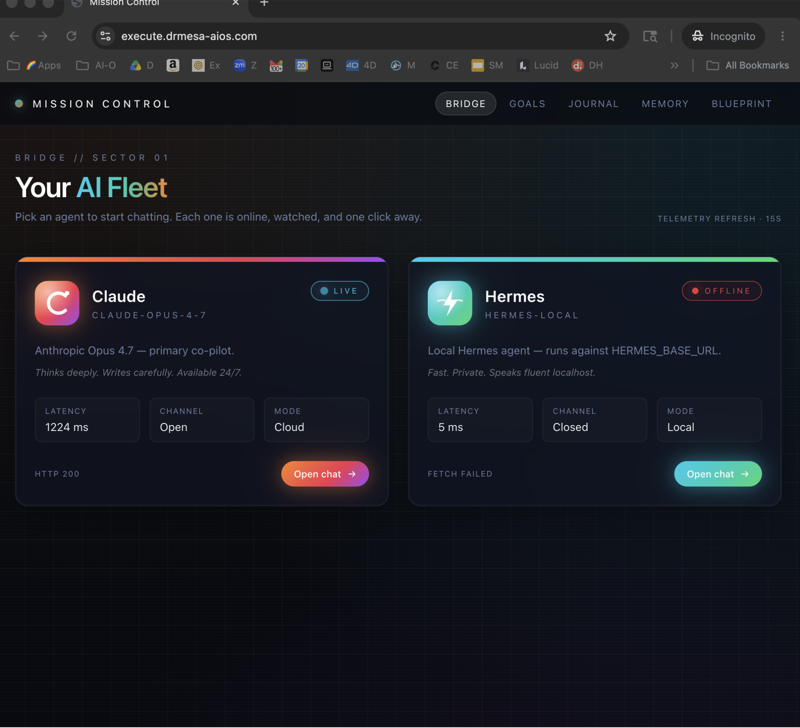
Write your workflows down as plain documents, even rough ones. Mission Control will surface and visualise these workflows when it ships, which means your documentation literally becomes your dashboard.
6 — Master Computer Use V1 thoroughly
Get genuinely fluent with the computer use features that have already shipped, because V2 builds directly on top of V1 skills. Without V1 mastery, V2 becomes overwhelming on release day.
7 — Build your community presence early
Join the Discord, watch the GitHub repository, and post your wins or questions regularly. Active members consistently get the heads-up on roadmap changes before passive lurkers, which is leverage you can't buy.
These seven get you ready for everything else.
Watch The Roadmap Walkthrough
For the computer use features that have already shipped, this walkthrough is the one to watch.
OpenClaw Roadmap Skills Worth Building Today
These are the five skills that keep paying off no matter what ships next.
1 — Daily summary skill
This is always useful regardless of what features land later. Build it first because it gives you a daily win that proves the system works.
2 — Research skill
Always useful and the basis for almost every advanced workflow you'll build later. Web research, document research, and structured output are all extensions of this core skill.
3 — Content drafter skill
Always useful for founders, marketers, and creators alike. The drafter skill becomes the keystone for any content workflow you build on top of OpenClaw.
4 — Email triage skill
Always useful because email never goes away. This is the skill that pays back its build cost in the first week.
5 — Customer FAQ skill
Always useful for any business with customers. This is the skill that scales support without scaling headcount.
These five form the foundation that compounds across every future release.
Three Habits That Compound Over Time
Three habits worth installing now that pay off across the whole roadmap.
1 — Weekly skill review
Refine one skill per week as a fixed habit. Over a year that's 52 skill upgrades, which is genuinely transformative.
2 — Release watching
Check the OpenClaw GitHub weekly for new commits, issues, and discussions. You'll spot patterns and upcoming features weeks before official announcements.
3 — Community engagement
Post your wins, ask questions, and answer other people's questions in the Discord. Active members get information flow that lurkers never see.
These habits compound into significant leverage by month six.
What Beginners Should Skip
Save yourself months by skipping these traps.
Don't try to write memory persistence DIY when v2 is coming. Don't build swarm orchestration from scratch when native swarms are on the roadmap. Don't fork OpenClaw to add features that are about to ship. And don't optimise for features that haven't shipped yet — focus your energy on what's actually live today.
Focus on what's shipped, not what's coming.
How To Time New Feature Adoption
Three rules I follow for every release.
1 — Don't adopt week one for production
Wait for stability before pushing to production. Use a sandbox environment for week one experimentation.
2 — Adopt week two to three for testing
Move from sandbox to staging in this window once obvious bugs have been patched.
3 — Adopt week four onwards for production
After community feedback has surfaced edge cases, you can safely roll to production.
This pacing minimises risk while keeping you current.
What's Coming In Q2 2026
These are the likely Q2 releases based on current roadmap signals.
Mission Control is approaching general availability or near-GA quality. Memory Persistence v2 enters beta. Multi-app computer use ships across more application surfaces. Plan your skills and workflows accordingly.
What's Coming In Q3 2026
Q3 likely brings the bigger structural releases.
Native swarms with manager and worker patterns. Voice UI improvements that make agent control more natural. Telegram integration deepens for full mobile control. Plan your community presence and integrations to take advantage.
What's Coming In Q4 2026
Q4 is more speculative, so don't plan firmly here.
Browser-native workflows are likely. A mobile companion app may land. A skills marketplace is rumoured but unconfirmed. Watch the roadmap but don't build dependencies on Q4 speculation.
How To Prepare For Mission Control
When Mission Control ships, you'll need clear workflow documentation, multiple agents already running so there's something to manage, and naming conventions for your agents so the dashboard is readable.
Set these up now and Mission Control will visualise what you already have on day one.
How To Prepare For Memory Persistence
When v2 ships, you'll need memory schema decisions made in advance, a clear sense of what's worth persisting versus what's transient, and privacy considerations sorted for any client work.
Plan these now to avoid scrambling at release.
How To Prepare For Swarms
When native swarms ship, you'll need a working understanding of manager and worker patterns, modular skills that can be composed, and inter-agent communication patterns. See Hermes Agent Swarm for the principles you can apply today before native support lands.
Three Common Preparation Mistakes
These are the mistakes I see people make over and over.
1 — Over-engineering for features that haven't shipped
Don't build what's coming, build what works today. Premature engineering against speculative roadmap features almost always gets thrown away.
2 — Skipping the foundation
Foundation work is forever. Don't skip the basics in pursuit of advanced features that you can't actually leverage without the foundation.
3 — Not engaging the community
Active community members get heads-up on roadmap changes. Lurkers fall behind, which compounds quickly across multiple releases.
What I Wish I'd Done Sooner
Three things I'd tell my past self.
1 — Joined Discord earlier
Active community presence is genuine leverage in the OpenClaw ecosystem. I lost months by lurking instead of engaging.
2 — Built skills earlier
Skills compound, and the earlier you start the more you have to leverage with each release.
3 — Documented workflows earlier
When Mission Control ships, my workflow documentation will become a dashboard automatically. Yours can too if you start writing now.
Roadmap-Aligned Investments
Where to spend your preparation time.
High ROI investments
Foundation setup, skills library, computer use V1 mastery, and community presence are all high-leverage. Invest here heavily.
Low ROI investments
DIY memory persistence, DIY swarm orchestration, and building features that are about to ship are all low-leverage. Skip these and let the roadmap deliver them.
Spend on high ROI, skip the rest.
A Quarterly Review Process
Run this every quarter to stay current without burning out.
Step 1 — Document what shipped
List everything that landed in the past quarter, even small features.
Step 2 — Score what's worth adopting
Rate each release by likely impact on your workflow.
Step 3 — Estimate the migration cost
Roughly estimate the days needed to integrate each release.
Step 4 — Plan the quarter ahead
Pick one or two features to integrate properly. Skip the rest until next quarter.
This keeps you current without the overload that kills consistency.
🚀 Want hands-on prep help? AI Profit Boardroom has weekly coaching where I'll plan your roadmap with you. → Join here
What Beginners Should Do In Their First Week
Three actions for week one.
1 — Install OpenClaw on day one
Get it installed and running on your machine on day one without trying to do anything advanced.
2 — Run your first workflow on day two
Pick the simplest possible workflow and run it end-to-end. The point is proving the loop works.
3 — Watch one release walkthrough on day three
Pick a recent release walkthrough and watch it all the way through to understand the pattern.
By the end of week one you have the foundation laid.
The Cost Of Preparation
Three numbers worth knowing.
Time investment
Setup takes 3 to 5 hours. Ongoing maintenance is roughly 30 minutes a week.
Money investment
OpenClaw itself is £0 because it's free and open source. The Boardroom membership is $69 a month if you want guidance and weekly coaching.
Effort investment
Foundation work is low effort. Skill building is moderate effort but compounds.
The cost is small. The leverage is enormous.
What Most People Get Wrong
Three patterns I see repeatedly.
1 — Waiting for the perfect release
"I'll start when feature X ships" is how you fall years behind. The people running the system today will be miles ahead by the time you start.
2 — Over-planning before starting
"I need to understand everything first" is paralysis dressed up as diligence. Just start, the understanding comes through doing.
3 — Trying to learn solo
Going alone is genuinely slow. Community engagement accelerates everything by an order of magnitude.
My Personal Roadmap Strategy
Three principles I run by.
1 — Build foundation forever
Skills, workflows, and documentation are timeless investments that pay back across every release.
2 — Adopt fast but not too fast
Wait two to four weeks after a major release before pushing it to production work.
3 — Track and reassess quarterly
Document what shipped, plan what's next, and update your stack accordingly.
This is how I stay current without burnout.
FAQ — OpenClaw Roadmap Preparation
How long does prep actually take?
3 to 5 hours upfront, then 30 minutes a week ongoing.
Will the roadmap break my current setup?
Usually no. OpenClaw maintains backward compatibility deliberately as part of its release process.
What if I don't have time for full prep?
Stick to the foundations and skip the advanced preparation. Even foundations alone put you ahead of 80% of users.
Should I wait for stable releases?
For production work, yes. For testing and learning, no — get hands-on with previews so you're ready when stable ships.
Can I influence the roadmap?
Yes. Open issues with clear use cases and submit PRs for things you've already built. The OpenClaw maintainers are responsive to active contributors.
What's the best first skill to build?
Daily summary, by a mile. It pays back from day one and forms the basis of more complex workflows.
How do I track releases?
GitHub for the technical detail and the Boardroom for curated takes on what matters and what to skip.
Related Reading
- OpenClaw Computer Use — already shipped and worth mastering now.
- OpenClaw Memory Persistence — coming soon and worth preparing for.
- How To Setup Hermes Agent — the foundation walkthrough.
📺 Video notes + links to the tools 👉
🎥 Learn how I make these videos 👉
🆓 Get a FREE AI Course + Community + 1,000 AI Agents 👉
The OpenClaw roadmap rewards prepared adopters massively, so set up the seven foundations this week and you'll ride every release with leverage rather than panic.