People ask me which SEO tool I'd keep if I could only keep one, and my honest answer usually surprises them: the best SEO tool I use isn't really a tool at all — it's an agent running a system. That's what the OpenClaw SEO tool setup people keep asking about actually is: my four-part traffic engine, the one behind my sites' growth, with OpenClaw as one of the agents that can run it.
📺 Watch: Hermes Agent Just Automated SEO Completely
🔥 Get the Agent OS as a free bonus: AI Profit Boardroom members get the full Agent OS zip, prompt libraries, daily tutorials and weekly live coaching calls. → Get inside
I've done SEO for over ten years, and I've spent the last stretch of it turning that engine into something agents can operate end to end — keyword research, content, links, even the learning between batches. I've already written about OpenClaw as an SEO agent and covered the wider OpenClaw AI SEO picture, so this page owns the angle nobody covers properly: the tooling itself. What the stack is, what each part does, and exactly where OpenClaw plugs in.
What the OpenClaw SEO tool actually is
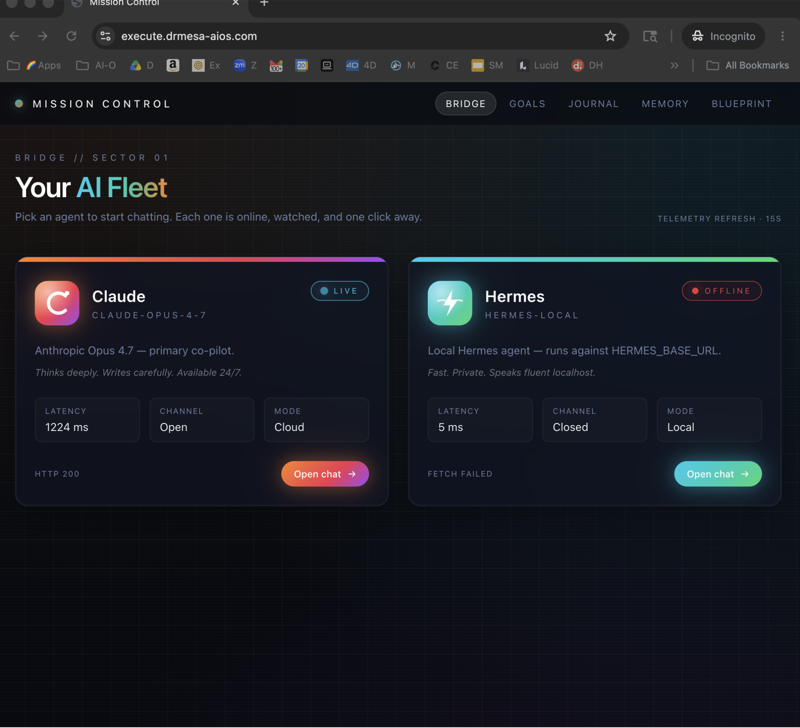
First thing to clear up: there's no boxed product called the OpenClaw SEO tool. No Chrome extension, no SaaS dashboard with a pricing page. What exists is better. OpenClaw is a free, open-source agent, and inside my Agent OS there's an SEO tab it can drive — a keyword tool wired to Google Search Console, a content system that writes from your real case studies, and an outreach tool that runs link building through Hunter and Google Workspace. OpenClaw plugs into that dashboard next to Hermes and Claude, all three sharing one memory vault.
The bit that took me longest to appreciate is that the engine is agent-agnostic. The SEO expertise doesn't live in the agent — it lives in the system: the keyword logic, the outreach templates, the linking rules. The agent executes. That's why the same stack runs whether I hand it to Hermes through my Hermes SEO skills, to Claude through my Claude AI SEO skill, or — the reason you're here — to OpenClaw when I want everything open-source and local. I've even tested pieces of it with Grok for SEO. Different engines, same wiring.
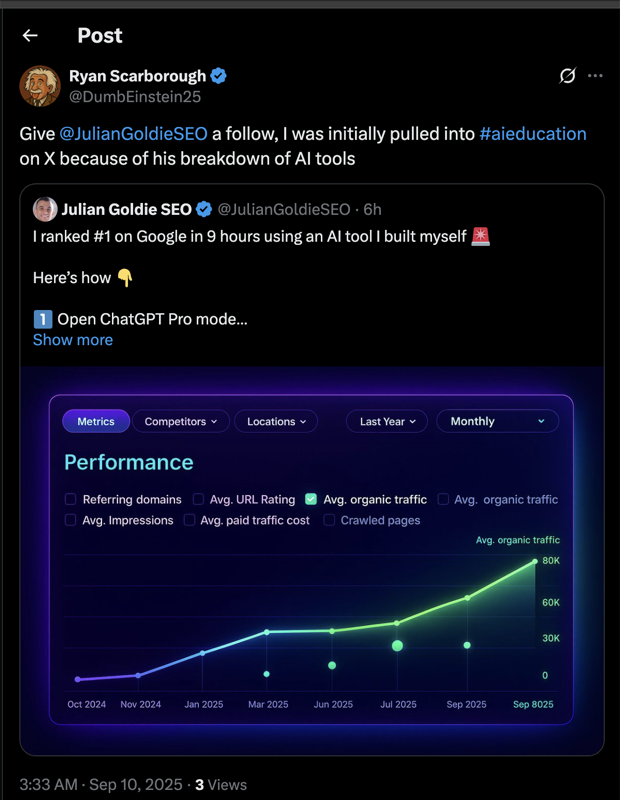
And the wiring works. This engine — which I've run primarily with my Hermes agents — has taken my sites from 0 to 325 clicks a day, another from 0 to 125, two more from 0 to 39 and 0 to 34. All free traffic from Google and AI search, no ads. These are low-authority domains too: one sits around domain rating 20, most are below that, and they're beating DR50 sites because the system does the fundamentals better. To be clear, I'm not claiming OpenClaw personally produced those charts — my engine did, and OpenClaw can run the exact same engine.
If you want the whole traffic engine pre-built, the AI Profit Boardroom ships the Agent OS with the SEO tab, keyword tool and outreach tool already wired. → Get the engine
The four parts of the engine
Whatever agent you run it with, the stack is the same four tools bolted together. Here's what each one actually does.
Part one: keywords — golden signals from Search Console
The keyword tool plugs into Google Search Console through the API and pulls one signal I care about more than anything else: keywords where my sites get impressions but no clicks. Think about what that means. Google is already showing you for the query — you just don't have a good-enough page to win the click. Google is effectively telling you it would rank you if you gave it a proper page. No guessing, no seed lists, no third-party volume estimates. The gaps are already sitting in your own data; the tool surfaces them on demand.
Part two: content — one case study in, five unique articles out
The content system takes a keyword plus one real case study from your business. That's the rule that makes it work: every fact comes from your source of truth, so nothing gets invented. Information gain — saying something the other ten results can't say — is what separates content that ranks from content that flops, and your case studies are information nobody else has. From one keyword, the system produces five genuinely different articles — different titles, different angles, different FAQs — across five sites, then pushes them through the Indexceptional indexing API so they're in Google within hours rather than weeks.
Part three: links — outreach the agent runs end to end
The outreach tool wires two things together: Hunter to find leads and their email addresses, and Google Workspace to send. I describe the kind of sites I want links from; the agent finds them, enriches them, writes personalised campaigns — first name, site name, a genuine reason for reaching out — then sends and manages the inbox, replies and follow-ups included. The links that actually grew my sites were manually placed, editorially added links inside real content. Those are exclusive votes competitors can't copy cheaply. And there's a bonus most people miss: links and brand mentions train AI engines too — the backlinks I built around best AI community terms now surface my site in Google's AI Overviews.
Part four: the self-improving loop
This is the part no traditional SEO tool has. At the end of every batch, the system reviews what worked and proposes updates to its own instructions. Memory across sessions means every lesson sticks. And the flywheel compounds: more content produces more impressions data, more impressions surface more keywords, more pages earn more links — and every article ranks a little faster than the last one did.
📺 Watch: How to Rank #1 with OpenClaw + Hermes AI SEO!
The honest timeline nobody puts on the sales page
SEO takes three to six months, especially on new sites, and no tooling changes that — including mine. One of my own sites sat completely flat from April to November. That's the sandbox: Google watching a new domain and deciding whether to trust it. Then it popped off, and it has kept climbing through multiple Google updates since. Most people quit at ten pages because the graph is flat and the effort is manual. The engine wins for a boring reason: when agents do the work, waiting costs no labour. The system keeps publishing, keeps indexing, keeps building links — and you're not burning your evenings to make that happen.
📺 Watch: How to Rank #1 with OpenClaw AI SEO
Does Google punish AI content?
The objection I hear most, so let's deal with it. Google punishes bad content, not AI content — this is the same Google putting AI Overviews at the top of its own results. What gets sites hit is thin, invented, zero-value content, which is exactly what the case-study rule exists to prevent. Content built on real examples, with genuine information gain, edited properly — that ranks. My charts are the receipts.
Running the stack with OpenClaw specifically
So why run it with OpenClaw rather than anything else? Two words: open source. OpenClaw is free, the code is inspectable, and it runs locally — which means your Search Console data, your case studies and your outreach inbox stay under your control. If you want the free AI SEO agent route with full privacy, this is it. Inside the Agent OS it gets the same SEO tab my Hermes agents use today: same keyword tool, same content system, same outreach tool, same memory vault. Nothing about the engine changes; only the hands on the keyboard do.
Which agent runs the engine best is genuinely a side-by-side question — that's what I built Goldie Bench to test, and I've written up Hermes vs OpenClaw separately if you're weighing the two. Whichever you pick, remember what the stack needs from you. The tooling handles execution; you supply the two things only you can: the context on your keywords and market, and the case studies that give your content its information gain. Bring those and the engine has everything it needs.
| Part | Tool wiring | What it does |
|---|---|---|
| Keywords | Google Search Console via the API | Pulls queries with impressions but no clicks — pages Google is already willing to rank |
| Content | Content system + your case studies + Indexceptional API | Turns one keyword into five unique articles across five sites, indexed within hours |
| Links | Hunter + Google Workspace | Finds leads, writes personalised outreach, sends, then manages replies and follow-ups |
| The loop | Memory vault + end-of-batch reviews | Reviews results, updates its own instructions, keeps every lesson across sessions |
| The agent | OpenClaw (or Hermes, or Claude) | Executes the whole system — open-source and local if you choose OpenClaw |
OpenClaw SEO tool FAQ
Is there an actual OpenClaw SEO tool?
Not as a standalone product. The real answer is a stack: OpenClaw is the agent, and the SEO tooling lives in the Agent OS — the keyword tool on the Search Console API, the content system, the outreach tool. OpenClaw drives them the same way Hermes and Claude do.
Does AI content actually rank?
Yes — when it's built on real case studies with information gain and edited properly. Google punishes bad content, not AI content. My sites' growth through multiple Google updates is the proof I point at.
How long until I see results?
Three to six months, longer on brand-new domains. One of my sites was flat from April to November before it popped. If someone promises rankings in a fortnight, run. The advantage here isn't speed — it's that the waiting costs you no labour.
What links actually move rankings?
Manually placed, editorially added links inside real content — earned through personalised outreach, not bought in bulk. They're votes competitors can't cheaply replicate, and they double as brand signals AI engines learn from.
Do I need to be technical to set this up?
Less than you'd think. If you can describe your business and paste prompts, the agent does the wiring. I walk through the full setup in my OpenClaw course, and the pre-built version ships with everything already connected.
My verdict
Stop shopping for a magic button. The OpenClaw SEO tool question has a better answer than any product: a four-part engine — keywords from your own Search Console data, content from your real case studies, links from genuine outreach, and a loop that gets smarter every batch — executed by an agent that never gets bored. OpenClaw is the open-source, private way to run it. That system took my sites from zero to hundreds of clicks a day. Bring your keywords and your case studies, give it the months it honestly needs, and let the engine do the rest.
If you want this engine earning traffic on your own sites without building a single piece of it, check out the AI Profit Boardroom — inside you get the full SEO engine setup as a zip, a 30-day roadmap, four weekly coaching calls, daily tutorials and 3,700+ business owners running this alongside you. → Start your traffic engine