DeepSeek OpenClaw outperforms plain DeepSeek chat by a wide margin — and the reason is the harness.
Most people compare AI tools by comparing the underlying models.
"Which is smarter — DeepSeek V4 Flash or Claude Sonnet?"
That's the wrong question.
The right question is: which harness is the model running inside?
Because the harness controls the model — and good harnesses make average models punch above their weight, while bad harnesses make great models feel useless.
This post is about why the harness matters more than the model — and why DeepSeek OpenClaw is one of the strongest free harnesses available.
What The DeepSeek OpenClaw Harness Actually Means
The harness is the framework around the model that controls:
- What tools the model can use (file system, browser, terminal, APIs)
- How tasks get planned (single shot vs multi-step)
- How memory is handled (session, persistent, summary)
- How errors get caught and retried
- How the model interacts with the real world (your computer, your network)
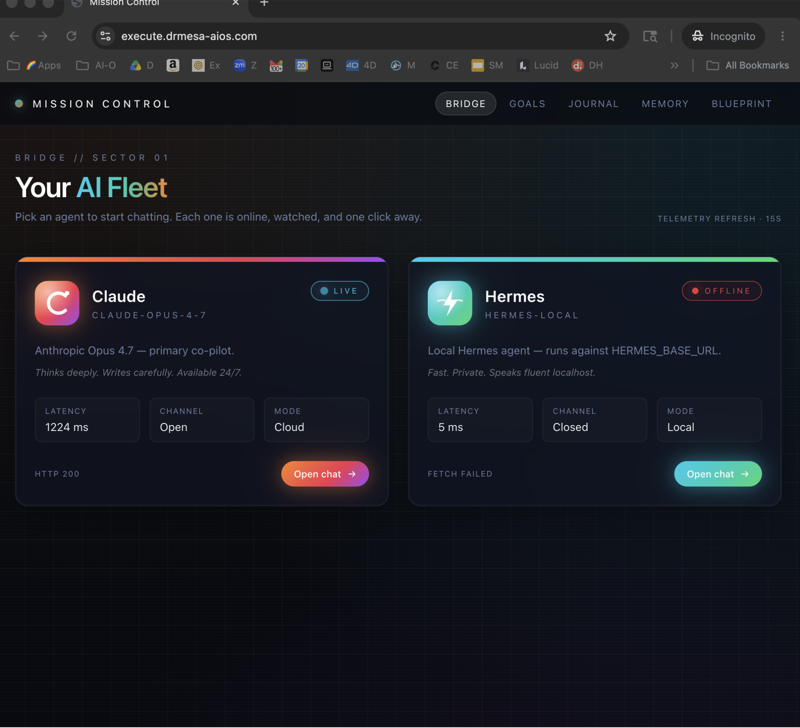
OpenClaw is a harness.
Hermes is a harness.
Claude Code is a harness.
ChatGPT is also a harness — but a much weaker one for agentic work.
🔥 Want my full harness theory + the practical implications for picking AI tools? Inside the AI Profit Boardroom I've documented the harness theory across all major AI tools, the decision framework for picking the right harness, and the patterns that show why some agents punch above their model. 3,000+ members already running with this framework. Click below. → Get the harness theory deep dive
Why DeepSeek V4 Flash Alone Is Just OK
Open chat.deepseek.com.
Type a prompt.
Get a response.
That's it.
You can chat. You can ask questions. You can get text responses.
What you CAN'T do without a harness:
- Run a command on your computer
- Read a file from your file system
- Open a browser and navigate
- Schedule a task to run tomorrow
- Build something that persists across sessions
- Spawn parallel sub-agents
- Self-improve based on feedback
That's why plain DeepSeek chat feels like a glorified Google.
It's the same model.
But the harness is missing.
What OpenClaw Adds
When you wrap DeepSeek V4 Flash in OpenClaw, you get:
1. File system access. OpenClaw reads, writes, edits files on your machine.
2. Terminal access. Run any shell command via the model.
3. Browser automation. Navigate, click, type, scrape.
4. Local gateway UI. A web interface to manage everything.
5. Skills system. Reusable workflow definitions.
6. Session memory. Conversation context persists.
7. Scheduled tasks. Cron jobs in plain English.
That's not a small upgrade.
That's the difference between a chatbot and an agent.
For more on browser automation specifically, my deepseek openclaw browser post covers the browser harness in detail.
The Theory In One Sentence
The harness tells the API what to do.
The API tells the model what to do.
The model generates text.
Without a harness, the text is just text.
With a harness, the text becomes actions in the real world.
That's why harnesses matter more than models.
Demonstration — Same Prompt, Different Harness
Same exact prompt: "Build me an SEO calculator landing page."
Plain DeepSeek chat: outputs HTML in the chat. You copy-paste, save to a file, open in browser yourself.
DeepSeek OpenClaw: generates the HTML, saves to disk, opens in browser, deploys to Netlify, gives you the live URL.
Same model.
Same prompt.
Wildly different outputs because of the harness.
The harness is what makes the model useful.
I covered the same theme from a different angle in my DeepSeek V4 OpenClaw post — pairs naturally with this harness theory deep dive.
When DeepSeek's Harness Beats Claude's Harness
Counter-intuitive but real.
In some scenarios, DeepSeek V4 Flash + OpenClaw outperforms Claude Sonnet alone:
Scenario 1 — Browser automation tasks. Claude alone can plan, but OpenClaw's harness executes browser actions reliably. Claude + Claude Code is the matched harness, but for browser work specifically, OpenClaw's tool layer is stronger.
Scenario 2 — Multi-step agentic workflows. Claude alone is single-shot. OpenClaw's harness lets DeepSeek loop, plan, execute, retry — collectively more capable than Claude solo.
Scenario 3 — Cost-constrained workloads. Claude alone is good but costs money. DeepSeek + OpenClaw is free and "good enough" for most agentic work.
The harness is the multiplier.
A weaker model with a stronger harness can beat a stronger model with a weaker harness.
That's the harness theory.
When Claude's Harness Beats DeepSeek's Harness
Equally honest.
Scenario 1 — Code reasoning depth. Claude Code's tool layer is matched to Claude's reasoning. For complex code, the matched stack beats DeepSeek + OpenClaw.
Scenario 2 — High-stakes critical output. When errors cost real money (deployed code, client work), Claude's harness has been hardened more.
Scenario 3 — Long-context analysis. Claude's context management in production is more polished.
For these, pay for Claude Code.
For the breakdown of when to reach for which, my Claude code AI SEO post covers the model + harness pairing logic.
🔥 Want my harness selection framework for any AI workload? Inside the AI Profit Boardroom I've put together a decision flowchart — for any task, which harness + model combination to reach for. Plus the trade-offs explained. 3,000+ members already optimising their AI stacks with this framework. Click below. → Get the harness selection framework
Why DeepSeek OpenClaw Harness Theory Matters For Your Decisions
Once you internalise that the harness matters more than the model:
1. You stop fixating on "which LLM is smartest". Multiple models can produce similar outputs given a good harness.
2. You start evaluating tools by their harness quality. Tool calling reliability, error handling, memory management — these matter more than benchmark scores.
3. You make better tool selection decisions. You don't pick "the smartest model" — you pick the right harness for your workflow.
4. You appreciate why open-source agents matter. Open harnesses (Hermes, OpenClaw) are arguably more important than open models.
That's the strategic shift.
The Future Of Harnesses
Three predictions for 2026-2027:
1. Harnesses converge on standards. agentskills.io is one example — skills become portable across harnesses.
2. Multi-model harnesses become normal. Hermes v0.6 already does this — different tasks route to different models. Expect this everywhere.
3. The harness IS the product. Open WebUI, Hermes, OpenClaw are arguably more valuable than the underlying LLMs.
Buy the harness.
Rent the model.
That's the architecture pattern.
For more on multi-model harnesses, my hermes ai course post covers Hermes's v0.6 fallback chain implementation — same theme, production form.
DeepSeek OpenClaw Harness FAQ
Is the harness the same as the agent?
Effectively yes — agent and harness are interchangeable terms in most contexts.
Does the harness need to be open source?
No — but open-source harnesses (Hermes, OpenClaw) are easier to inspect, extend, and trust.
Can I write my own harness?
Yes — covered in my build your own openclaw post. Educational and rewarding.
Why is OpenClaw a "free" harness if other agents charge?
OpenClaw is open source MIT licensed. The underlying API costs (DeepSeek, etc.) are separate.
Can a great harness make a mediocre model feel great?
Yes — that's the whole theory. DeepSeek V4 Flash + great harness > Claude Sonnet + bad harness.
Will harnesses standardise across vendors?
Slowly — the agentskills.io spec is one effort. Pace will accelerate as the market matures.
Related Reading
- DeepSeek V4 OpenClaw — practical applications
- Claude code AI SEO — Claude harness
- Build your own openclaw — write your own harness
Final Take
DeepSeek OpenClaw is the proof that the harness matters more than the model.
Same DeepSeek V4 Flash inside chat.deepseek.com — interesting but limited.
Same DeepSeek V4 Flash inside OpenClaw — genuinely capable agent.
The harness is the multiplier.
Pick your harness wisely.
🔥 Ready to pick the right harness for your workload? Get a FREE AI Course + Community + 1,000 AI Agents 👉 join here. Or grab the harness selection framework inside the AI Profit Boardroom.
Learn how I make these videos 👉 aiprofitboardroom.com
Video notes + links to the tools 👉 skool.com/ai-profit-lab-7462
Deepseek openclaw is proof that the harness wins — pick yours and ship.