Native hermes agent password manager integration arrived in Hermes Agent v0.21.2 on 11 September 2026: the agent can now sign in to sites and fill credentials from 1Password, Bitwarden or a local Hermes vault without ever seeing the secret itself, according to the official release notes on the NousResearch hermes-agent GitHub repository. Nous calls the design a password-blind vault, and it closes the single scariest gap in giving an AI agent real-world jobs — because until this release, an agent that needed to log in somewhere generally needed you to hand it the password.
📺 Watch: The NEW Hermes Agent + Agent OS is ABSURD! 🤯
🔥 Get the Agent OS as a free bonus: AI Profit Boardroom members get the full Agent OS zip, prompt libraries, daily tutorials and weekly live coaching calls. → Get inside · Want AI SEO help 1-on-1? Book a free SEO strategy session →
Hermes Agent Password Manager Integration: How It Works
The release notes describe a credential flow built so that secrets route around the model rather than through it:
- Supported sources. 1Password, Bitwarden, and Hermes' own local vault. You keep managing credentials wherever you already manage them; the agent gets a controlled channel to use them, not a copy.
- Password-blind filling. When a task needs a login, the credential is fetched and filled without being exposed to the agent's conversation or context. The model never sees the secret, so it cannot leak what it never had — not in logs, not in memory files, not in a prompt injection.
- Two-factor handled properly. Per the release notes, two-factor codes come from a saved authenticator key, or the agent asks for the code in your UI. Either way, the human stays in the loop exactly where a human should be.
- Private plugin installs. Plugins from private git repositories now install using your stored credentials through the same blind mechanism, so extending your agent no longer means pasting tokens into config files.
That last point pairs with another v0.21.2 change: a curated, SHA-pinned plugin catalogue with its own desktop management page and admission checks. Credentials and plugins are the two classic ways agent setups go wrong, and this release hardened both at once. For what is actually worth installing from that ecosystem, the best Hermes agent plugins guide has the ranked list.
Why Password-Blind Design Matters For Agent Users
Anyone running agents on real accounts has faced the uncomfortable question: what happens to a password after the agent uses it? In a naive setup it lands in the conversation context — which means it can end up in session logs, in the agent's memory files, or exposed to anything that can read the transcript. A password-blind vault removes that entire class of risk architecturally instead of asking you to trust the model's discretion. It is the same principle behind separating your agent's workspace from your personal machine, covered in the Hermes agent workspace guide: good agent security comes from structure, not from hoping the model behaves.
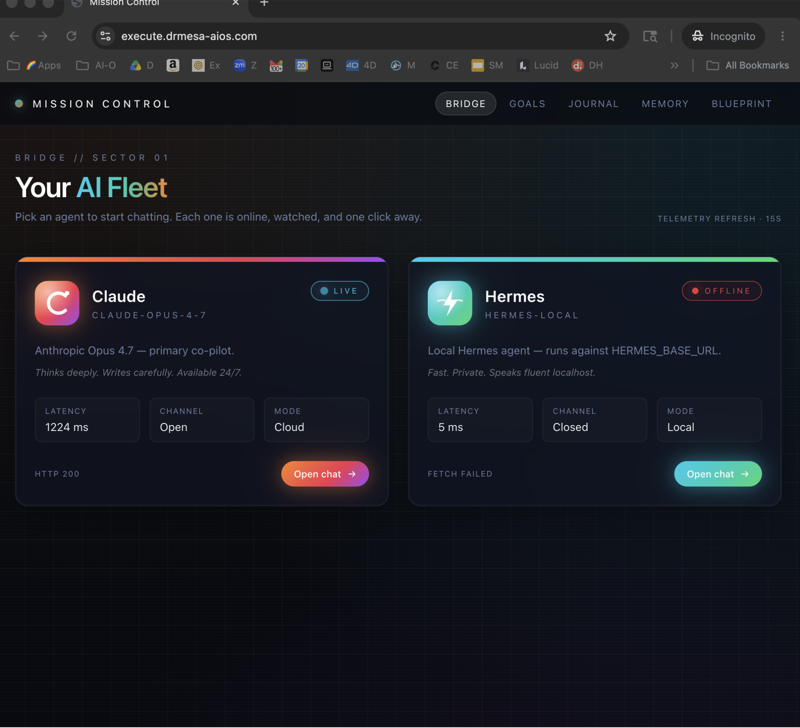
It also changes what you can sensibly delegate. Tasks that were previously off-limits — checking a dashboard behind a login, posting to an account, pulling a report from a members area — become reasonable to hand over once the credential path is blind and two-factor stays under your control. The agents-with-real-jobs pattern in the Hermes agent mission control write-up gets much more practical when logins stop being the blocker.
If you want agents doing real delegated work — with the workflows, guardrails and daily tutorials already built for you — check out the AI Profit Boardroom → get the full agent playbook. Want tailored 1-on-1 help with your AI SEO setup as well? Book a free SEO strategy session.
📺 Watch: Stop Overcomplicating Hermes Agent... Do This Instead!
Setting Up The Integration
The sequence for getting password manager integration running on your machine:
- Update Hermes. The feature ships in v0.21.2 and later, so run hermes update in a terminal — the official upgrade path. New users can start from the how to set up Hermes agent guide first, and a follow-up patch, v0.21.3 (14 September 2026), added further stability fixes on top, so updating fully is worth it.
- Choose your credential source. If you already run 1Password or Bitwarden, connect the one you use — the integration's whole value is that credentials stay in the manager you already trust. If you use neither, the local Hermes vault is the built-in option.
- Set up two-factor handling. Save an authenticator key for accounts where you want fully delegated logins, or leave it unset for sensitive accounts so the agent must ask you in the UI each time — a deliberate speed bump you may want on things like banking or your email.
- Test on a low-stakes account first. Give the agent one harmless login task and watch the flow end to end before pointing it at anything that matters. The desktop app, covered in the Hermes desktop app guide, is the easiest place to watch what the agent is doing while you build trust in it.
The Release Around It: Reliability Was The Theme
Context makes this feature more credible. The v0.21.2 release notes describe a release dominated by reliability work — 947 non-merge commits and 312 merged pull requests from 140 contributors — with a campaign against state.db database corruption as the headline: eliminating simultaneous writers, fixing WAL databases that got stuck on certain filesystems, containing full-text-search index damage so it no longer killed whole conversations, and cutting database open latency from seconds to hundredths of a second in affected setups. Sessions also no longer bind to another profile's database in multi-profile setups — six separate isolation fixes for people running bots, adapters and MCP servers side by side. If your agent talks to external tools through MCP, the Hermes MCP server guide covers that layer.
A vault feature is only as good as the platform storing its metadata, so shipping password-blind credentials inside the same release that hardened the storage layer is the right order of operations. The same notes also list a free Nous inference tier and guided onboarding for new users — a signal that Nous is simultaneously lowering the entry bar and raising the security ceiling.
Honest Limits And Cautions
Keep expectations calibrated before you wire your whole credential store into an agent:
- Blind does not mean risk-free. The agent cannot read your password, but it can still act on the logged-in session. Scope what each agent is allowed to do after login; the credential design does not replace task-level judgement.
- Start with a subset. There is no reason to expose your full 1Password or Bitwarden collection. Grant access to the handful of accounts the agent genuinely needs for its jobs.
- Two-factor is your control point. The ask-in-UI option is the difference between delegation and abdication for sensitive accounts. Use it deliberately rather than saving authenticator keys for everything.
- The details will evolve. This shipped days ago; expect refinements in coming releases, and read the release notes before each update changes behaviour you rely on.
- Keep an audit habit. Review which logins your agent has actually used each week, the same way you would review a contractor's access. Password manager integration makes delegation safe to start — periodic review is what keeps it safe at month six, when the novelty has worn off and the agent has quietly accumulated jobs.
Where This Fits In A Serious Agent Stack
Credential handling was one of the last missing pieces between "agent as a chat toy" and "agent as a delegated operator". With password manager integration, the practical stack now looks like: a structured operating layer such as Agent OS defining what the agent does and how, a hardened Hermes install running it, blind credentials letting it act on real accounts, and a model brain you choose per task — the Goldie Bench write-up covers how those brains compare in hands-on tests when you make that choice. None of those layers is exotic any more. The gap between people getting real leverage from agents and people still watching demos is mostly whether they set the stack up.
The hermes agent password manager integration in v0.21.2 is, per the official release notes, exactly what it claims: 1Password, Bitwarden and local vault support with the agent kept blind to secrets and two-factor kept under your control. If delegated logins were the reason your agent could not touch real work, that reason expired on 11 September 2026.
If you want to build agents that safely run parts of your business — with the Agent OS zip, prompt libraries and weekly live coaching calls included — check out the AI Profit Boardroom → start inside AIPB today. Prefer a personalised roadmap first? Book a free SEO strategy session and get direction on your exact setup.