Agentic AI OS is the term I use for the personal AI operating system I run on my machine and the question I keep getting from beginners this week is simple — where do I start. So this is the beginner guide I wish I had handed myself a year ago. No jargon, no fluff, just the order to build your first Agentic AI OS and the three commands that unlock the multi-modal layer.
In this guide I will walk you through what an Agentic AI OS actually is, why a beginner should care, the order I would build it in today, the Hermes plus Grok setup, and the daily routines that make it pay off in the first week.
🔥 Get the full Agentic AI OS as an AIPB bonus AI Profit Boardroom members get the Agent OS zip file, 100 prompts, 30-day roadmap, plus Hermes Agent + Claude OS launch kit. → Get inside
What An Agentic AI OS Is In Plain English
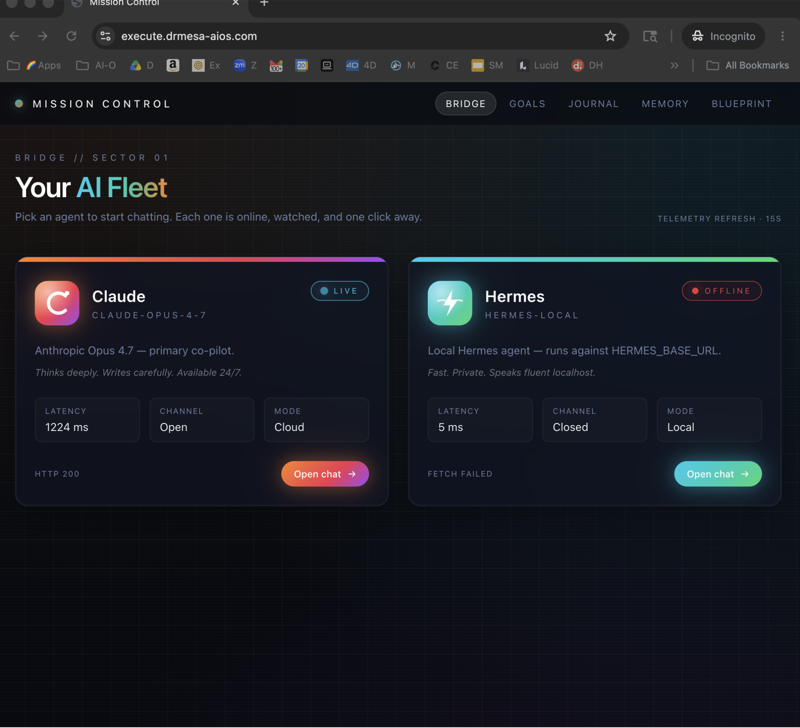
An Agentic AI OS is one place on your computer where all your AI tools live and work together. Instead of opening five tabs for five tools, you open one dashboard.
The agents inside it can think, do things on your machine and remember what they have done before. They share notes with each other. They share memory. They share your context.
It is the upgrade from chatting with one AI at a time to running a small team of AI agents that work together on your behalf.
The simplest way to picture it is this. A normal AI tool is a contractor you brief from scratch every time you talk. An Agentic AI OS is a small team that already knows your business.
Why A Beginner Should Care
Most people skip the foundations and chase the latest model. Beginners who start with an Agent OS get a compounding edge because every prompt, note and output gets stored and reused.
You also stop wasting money on overlapping SaaS tools. The OS replaces several of them with one shell, so your monthly spend goes down even as your output goes up.
The other thing a beginner needs is a single front door. Without one you bounce between tabs and never get into a flow. The dashboard fixes that on day one.
The Stack You Actually Need
You do not need every tool ever made. You need four layers and one tool per layer to begin.
Layer one is Intelligence. Pick Claude. It does the thinking and writing.
Layer two is Execution. Pick OpenClaw. It handles clicks and keystrokes on your machine.
Layer three is Research. Pick Hermes with Grok plugged in. It gathers live signals and produces images, video and voice.
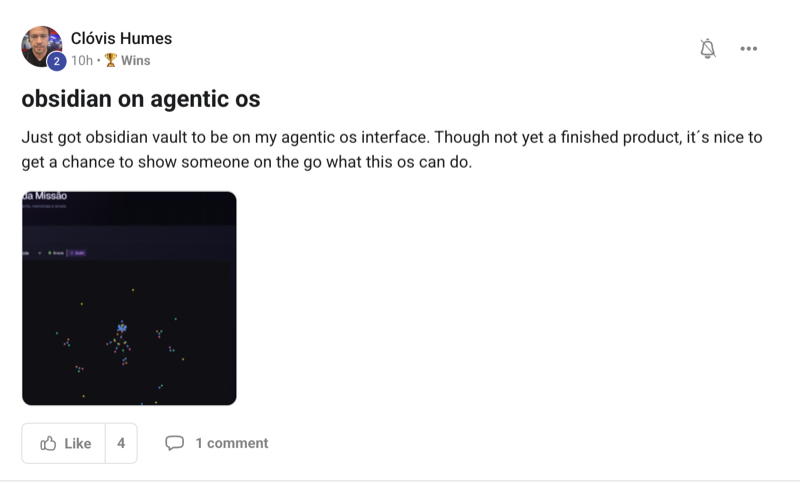
Layer four is Self. Pick Obsidian and add OMI later. It holds your notes, your standards and your voice transcripts.
That is the whole stack. Four tools, four layers, one OS.
The Hermes Plus Grok Backbone
Hermes is the framework that holds the whole OS together. It hosts your agents, stores your memory and exposes the dashboard.
Earlier this year Hermes was strong at text but missing the visual layer. The Grok integration changed that. Plug Grok into Hermes and you get four new senses at once.
X search is the eyes. It watches the live feed of Twitter for any signal you care about.
Image generation is one set of hands. Grok Imagine produces hero shots, thumbnails and social images on demand.
Video generation is the other set of hands. Grok video produces short clips of around 25 seconds that are good enough for hooks and ads.
Text to speech is the voice. Grok TTS turns any script into a voice clip that sounds close to human.
That bundle is free if you already pay for an X subscription, which is the part that surprises most beginners.
The Three-Command Setup
This is the easiest part of the whole guide. Three commands, one browser login.
hermes update pulls the latest Hermes build with the Grok auth ready to go. Skip this and you will not see Grok in the model picker.
hermes model opens the model picker. Scroll to XAI Grok Auth, hit select, and a browser window opens. Log in with your X account, approve the connection, and the token is stored locally.
hermes tools opens the tools menu. Enable X search, image generation, video generation and text to speech. Tick all four.
That is your multi-modal layer unlocked. Most beginners are done in under five minutes.
What To Build On Day One
Pick the simplest possible workflow. The goal of day one is to prove the OS works, not to build the perfect pipeline.
A good day-one task is a daily X digest. Ask Hermes to pull the top five trending topics in your niche and summarise them in Obsidian. You get an instant proof point and a useful piece of intel.
A good day-two task is one image generated through Grok Imagine that you actually use for a post. That proves the visual layer works and shows you the quality is good enough for real work.
A good day-three task is one voice clip from text to speech that you use as a voice memo or draft podcast. That closes the loop on the audio layer.
By day four you should have used every modality once. That is when the OS starts to feel like a team.
The Goldie Mission Stack For Beginners
The four layers I built around are the same ones I recommend every beginner copy from day one.
Intelligence is the brain. Claude does most of the writing, reasoning and planning. If a task needs judgement, it starts here.
Execution is the hands. OpenClaw clicks, types and runs jobs on your machine. If a task needs action, it ends here.
Research is the senses. Hermes plus Grok pulls live data, generates images, produces video and creates voice. If a task needs awareness, it goes here.
Self is the memory. Obsidian holds your notes and OMI captures your voice. If a task needs context, it pulls from here.
When all four layers exist, the OS works. Miss one and the experience is noticeably worse.
Why The Self Layer Matters On Day One
Most beginners skip Obsidian and OMI because they think those tools are for advanced users. That is the most expensive mistake in the whole guide.
The Self layer is what turns generic AI output into output that sounds like you. Without it, every agent produces text that could have come from anyone. With it, every agent produces text shaped around your business and your voice.
Start small. A few SOPs, an offer description, and a couple of meeting transcripts is enough for week one. The vault grows from there.
Add OMI when you are ready. The wearable captures voice notes during the day and pipes them into Obsidian automatically. After a month your vault is a serious moat.
The Studio Section Inside The OS
The newest piece of my OS is a Studio section that handles all visual and audio work. I added it with a single prompt to Claude Desktop and it now lives as a permanent module in the dashboard.
For a beginner, Studio is the place you go when you need a finished asset. Image, video or voice — Studio produces it.
The parallel feature is the part that makes it feel different from any single SaaS. One tab generates a video, another generates a voice clip, a third generates an image. The OS saves the history so you can grab outputs later.
Watch The Walkthrough
If you want a complete picture before you start, my Hermes Agent Installation Guide 2026 covers the install in even more detail.
Why Local-First Is The Beginner-Friendly Choice
A lot of beginners assume cloud is easier. In practice local-first is the easier and safer choice for an Agent OS.
Privacy is the first reason. Your notes and your business context never leave your machine. Cloud platforms turn that into training data and that is a bad starting point.
Speed is the second. Local reads and writes are instant. Cloud agents pause every few seconds, which kills the flow when you are still learning.
Cost is the third. Local-first means you pay for the model calls you use, not a SaaS subscription that scales with the number of users.
Comparison Table — Chatbot Vs Agentic AI OS
| Capability | Single Chatbot | Agentic AI OS |
|---|---|---|
| Memory across sessions | None | Shared Obsidian vault |
| Multi-modal output | Limited | Text, image, video, voice |
| Real-time web | Limited or paid extra | Grok X search included |
| Personalisation | Resets each chat | Trained on your vault |
| Number of agents | One | Many running together |
| Local-first | No | Yes |
| Compounding improvement | No | Yes |
| Cost per modality | Multiple subs | One X subscription |
That is the gap a beginner closes by spending a few hours building the OS.
🚀 Need an AI agent stack for your agency? Book a free SEO + AI Strategy Session with Goldie Agency. → Book free session
A Beginner's First Week On The OS
Day one is install and run a simple X digest. The win is seeing the OS produce real-time data inside your dashboard.
Day two is image generation. Make one hero image, post it, and prove the visual layer works for your brand.
Day three is voice. Generate a 30-second voice clip from a script and use it as a voice memo.
Day four is the Self layer. Add five SOPs, three offer descriptions and a couple of meeting transcripts into Obsidian.
Day five is personalisation. Ask Hermes a question that references your vault and notice how different the answer is.
Day six is automation. Pick one repeatable task you do every day and build a small pipeline for it.
Day seven is reflection. Look at what the OS produced this week and decide where to invest next.
Common Beginner Mistakes
The first mistake is skipping the Self layer. Without it the OS is generic and you will not feel the magic.
The second is trying to do everything in week one. Build one workflow at a time and let the stack compound.
The third is ignoring Git or version control on your prompts. Treat your prompt library like code so you can roll back.
The fourth is not joining a community where other people are running the same stack. You will get unstuck ten times faster with peers.
When To Skip The OS
If you only use AI a couple of times a month, this is too much infrastructure. A standard chat tool is fine until your usage grows.
If you are in a strict no-local-tools environment for compliance reasons, the OS will not fit. You can run a lighter cloud version but you lose the local-first advantages.
For everyone else who uses AI most days, the OS is the upgrade. The setup is short and the payoff starts in the first week.
FAQs
How long does the full beginner setup take?
Roughly an afternoon if you follow the launch kit. The three Hermes commands take two minutes. The Self layer takes a little longer because you need to seed it with notes.
Do I need a coding background?
No. The terminal commands are copy and paste. The rest is dashboards and prompts.
Will this replace ChatGPT for me?
For most workflows yes. The OS hosts Claude as the Intelligence layer and you can plug in other models if you want them.
Is Grok safe for beginners?
Yes. The auth flow uses your existing X account and stores tokens locally on your machine.
What if I get stuck during setup?
The launch kit includes a step-by-step roadmap and the AIPB community runs weekly live calls where I walk through setups on screen-share.
FAQ — How To Build An Agentic AI OS
Can I start without OMI?
Yes. Start with Obsidian only. Add OMI later once you want passive voice capture.
What is the minimum hardware?
A modern Mac or PC with 16GB of RAM. No GPU needed.
Can I share the OS with my team?
Yes. Run a shared Obsidian vault for team context and individual agent shells per person.
Is the launch kit worth joining AIPB for?
If you want a pre-built Agent OS zip, the 100 prompts and the 30-day roadmap, yes. The weekly coaching makes setup mistakes much rarer.
Will the OS get smarter the more I use it?
Yes. Every prompt, note and output ends up in the Self layer, which means future prompts get better answers. That is the compounding effect that beginners feel after a month.
Latest Updates
- Hermes Agent Installation Guide 2026 — the install path I recommend for beginners.
- OMI Obsidian — the wearable plus vault combo that powers the Self layer.
- Claude Hermes Agent — the Claude plus Hermes pairing at the heart of the Intelligence layer.
Further Reading On Agent OS Guide
For deeper walkthroughs on the topics in this article, the Agent OS Guide library has these worth bookmarking.
- Agent OS Guide — the full library of agent OS walkthroughs in one place.
- Hermes Agent OS Q&A — the most asked Agent OS questions answered in one page.
- NotebookLM Agent OS — how to wire NotebookLM into your agent OS as the research layer.
- Agent OS Member Testimonials — real operator stories from people running an agent OS daily.
Also On Our Network
- 🌐 Read on bestaiagentcommunity.com
- 🌐 Read on aiprofitboardroom.com
- 🌐 Read on juliangoldieaiautomation.com
- 🌐 Read on aimoneylabjuliangoldie.com
Related Reading
- Hermes Agent OS — the full Agent OS breakdown for after the beginner guide.
- Hermes AI Agent Framework 2026 — the framework powering the Research layer.
- Hermes MCP Server — how to expose Hermes capabilities to other tools.
- Hermes Computer Use — the Execution layer that handles real clicks and keystrokes.
- Hermes Agent HUD UI — the dashboard that ties every layer together.
📺 Video notes + links to the tools 👉
🎥 Learn how I make these videos 👉
🆓 Get a FREE AI Course + Community + 1,000 AI Agents 👉
How to build an Agentic AI OS as a beginner is the highest-leverage move you can make this quarter — install Hermes, wire in Grok, seed your Obsidian vault, and you will outpace people who have been using AI for years inside a single week.